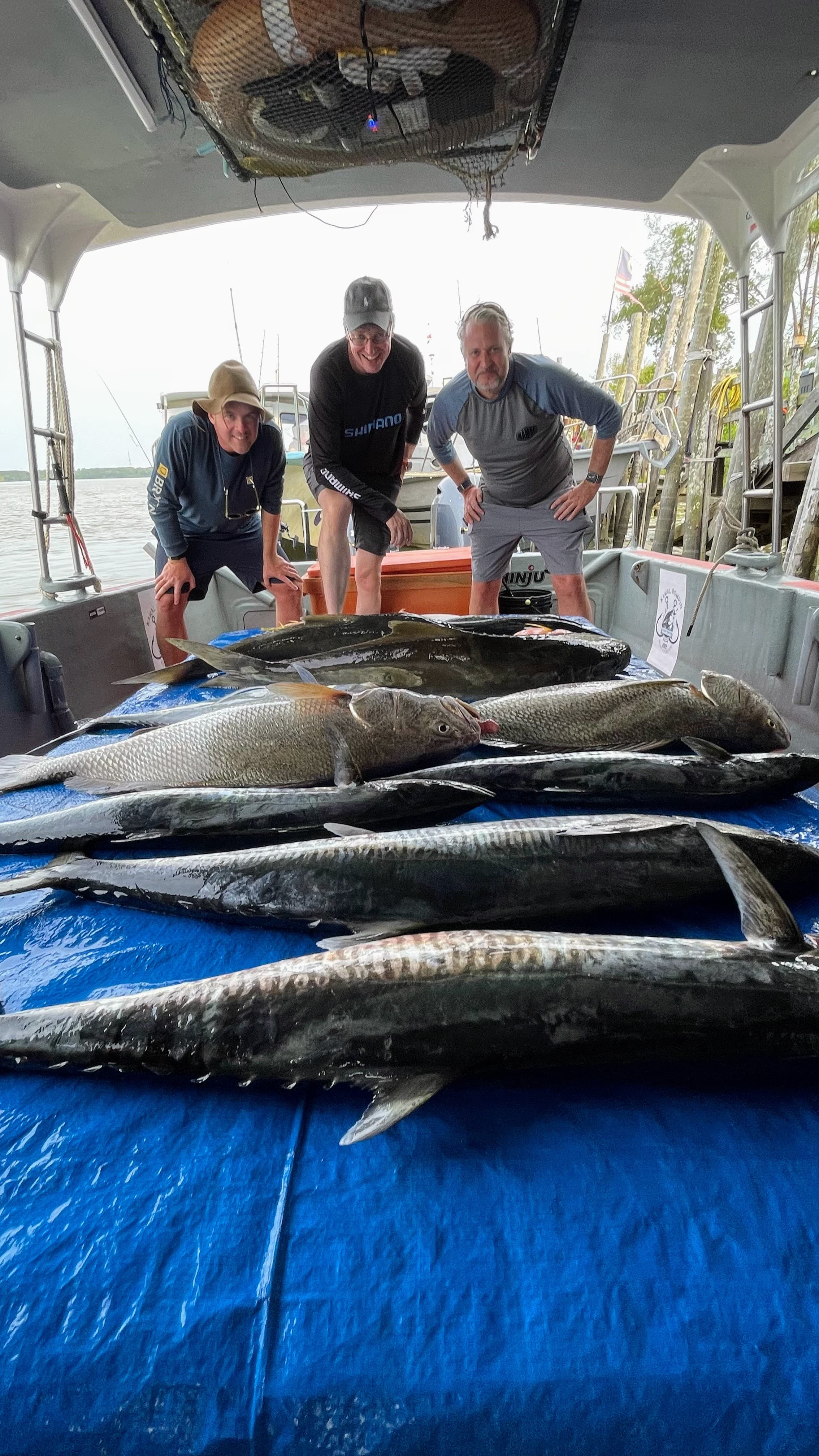
Return to Kuala Rompin: The Open Season Thrill
Capitalizing on the post-monsoon bite off the East Coast.
There is an undeniable thrill in waiting for the open season in Kuala Rompin. Following the long monsoon break, which halts all fishing across these waters from October straight through to mid-March, the ocean finally opens its doors again. With five months of rest, the waters are primed, offering incredible opportunities to explore what the South China Sea has to offer.
This time around, I was back on the water with Riku and his friends, who had traveled all the way down from Singapore. Riku is no stranger to these waters; we've shared several great outings since 2021 and 2022. From hunting sailfish on his first trip, to bringing his son along, to targeting big Queenfish, we’ve had our fair share of adventures. While our primary target, the iconic Sailfish, proved elusive on this specific trip, the open season always guarantees a spectacular multi-species bite if you know where to look.
The Journey to Karang Luas
With only one day to fish, it was a bit of a hit-or-miss scenario, so we set out to maximize every minute. We journeyed 30 nautical miles offshore toward Karang Luas. Usually, we head in the general direction of Pulau Tioman, but this time we opted for a different mark.
The ride was surprisingly bumpy and it took us a solid hour and a half of choppy, windy conditions just to reach our first spot. We ran through our usual fishing routine, prepping live prawns and actively seeking out small baitfish like Indian mackerel, sardines, and yellowtail scads.
About 40 minutes offshore, we received a spectacular welcome. A juvenile Sailfish, probably around 10 to 15 kg, calmly sprinted out of the water. It was almost as if it was saying hello and welcoming us back to Rompin, a perfect sight to get the boys fired up through the day.
"Don't leave biting fish to find more fish. If the spot is producing, focus on maximizing your yield rather than chasing the unknown.
"
— Noru Razak
The Cobia Surprise
Once anchored near a designated FAD (Fish Aggregating Device) in about 40 to 60 feet of water, we deployed our spread. Our strategy was comprehensive, three bottom rods loaded with live prawns or cut bait to target snappers and groupers, and two mid-water live bait rods to intercept pelagics like Spanish Mackerel or roaming Sailfish. Meanwhile, the rest of the crew actively cast metal jigs.
At first, the spot was dead quiet. But then, on my very first drop with a micro 30-gram jig, I got slammed...
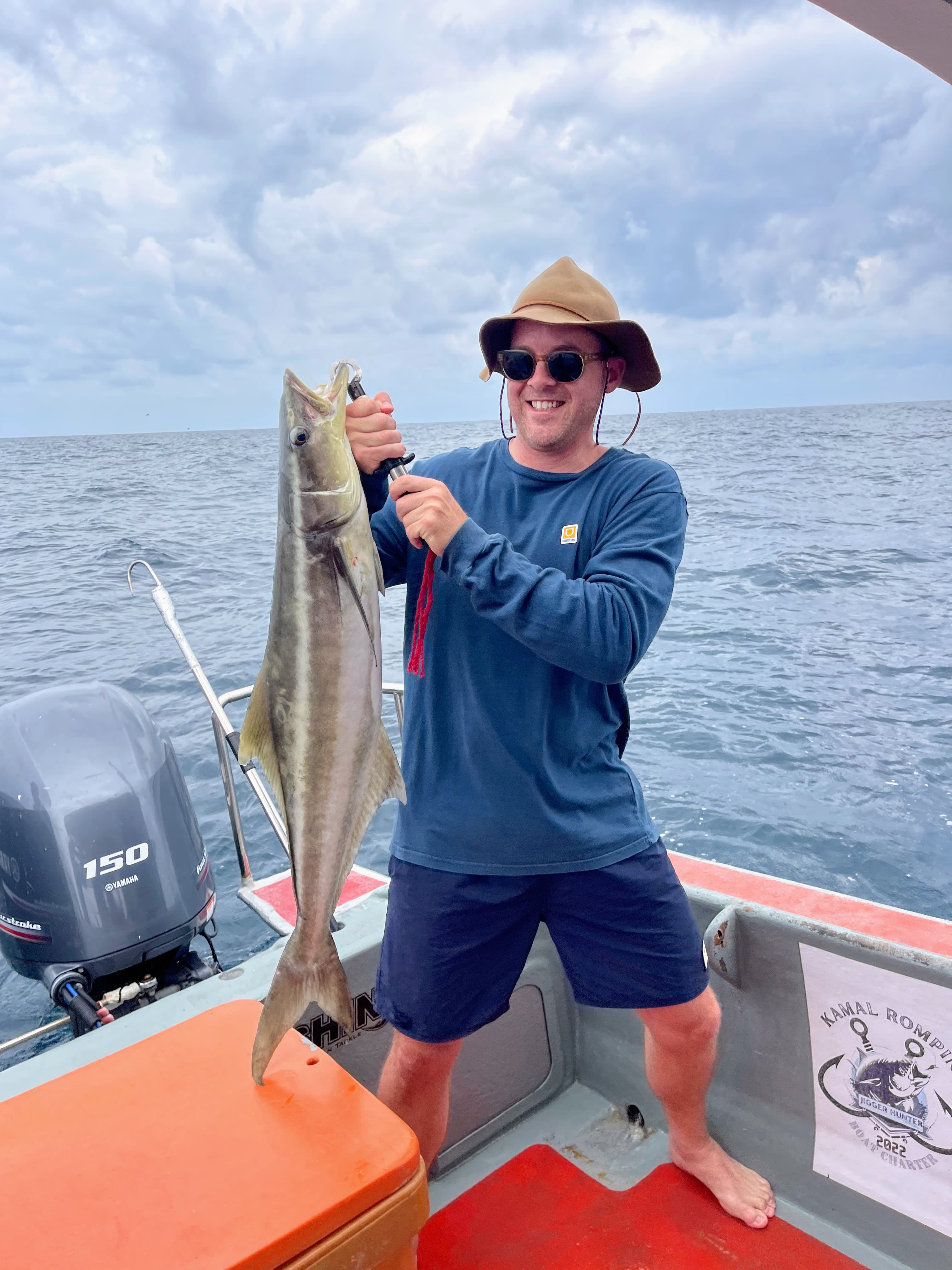
I passed the rod off, and the angler strapped in for a solid five-minute fight. The fish stayed deep, fighting with a stubborn weight that made us suspect a large Diamond Trevally or even a shark. When it finally broke the choppy surface, we were staring at a super-sized Cobia. It was a brilliant start to the day.
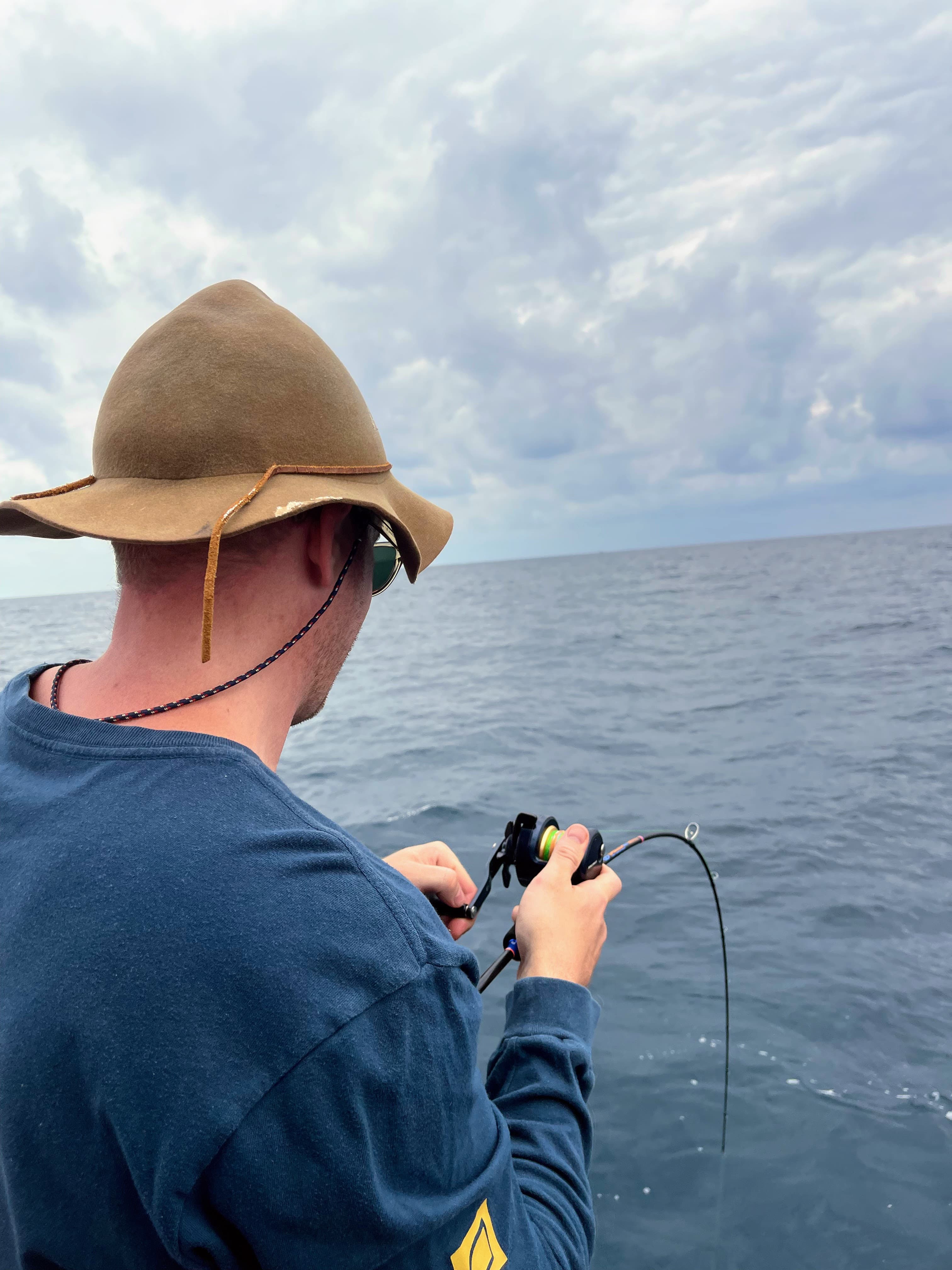
Moments later, the front rod carrying a live bait went off. Another five-minute battle ensued, yielding a second beautiful Cobia. I hooked into a third shortly after on my multiplier reel, but unfortunately missed the hookset.
Spanish Mackerel and the Mid-Day Lull
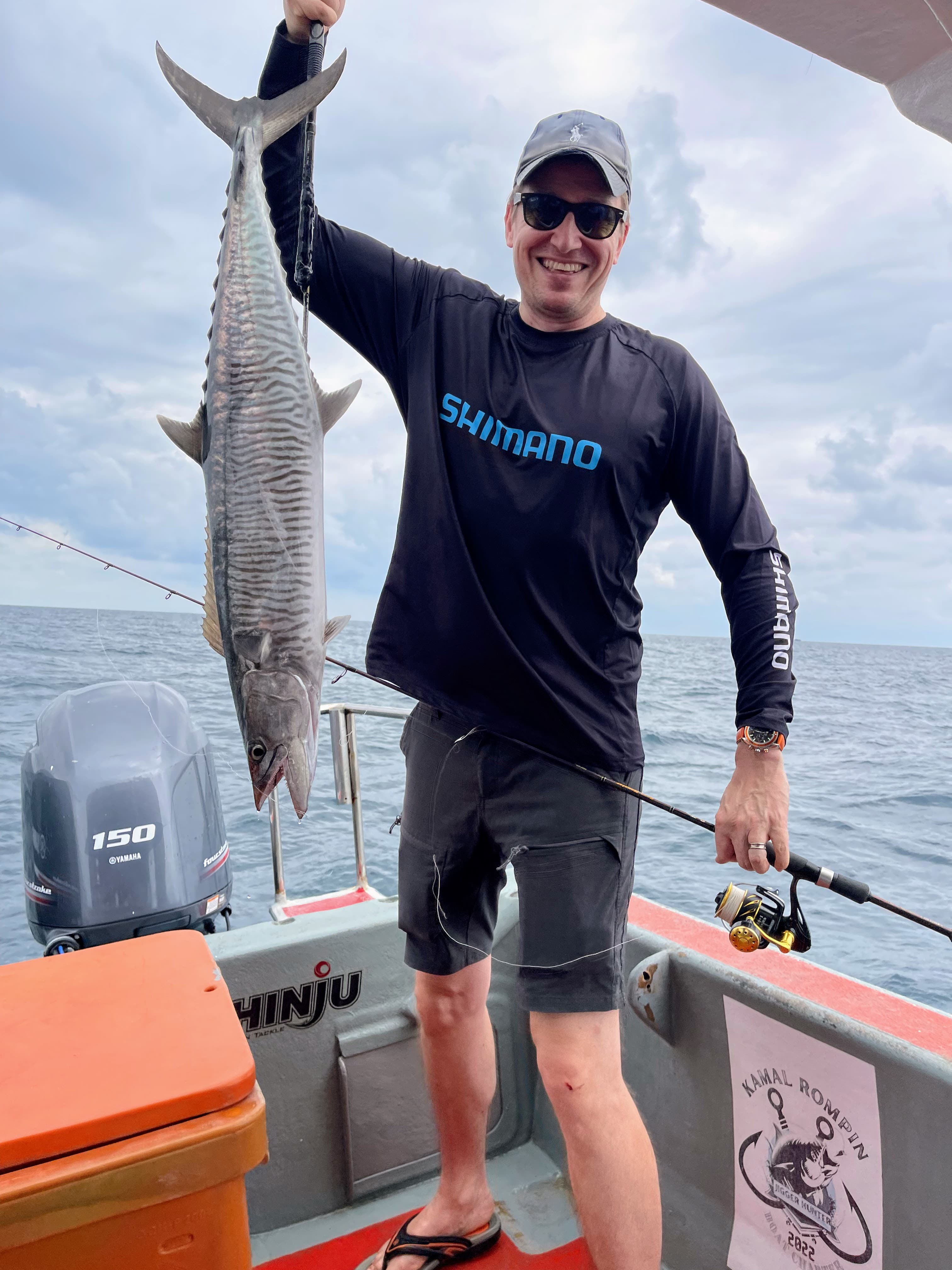
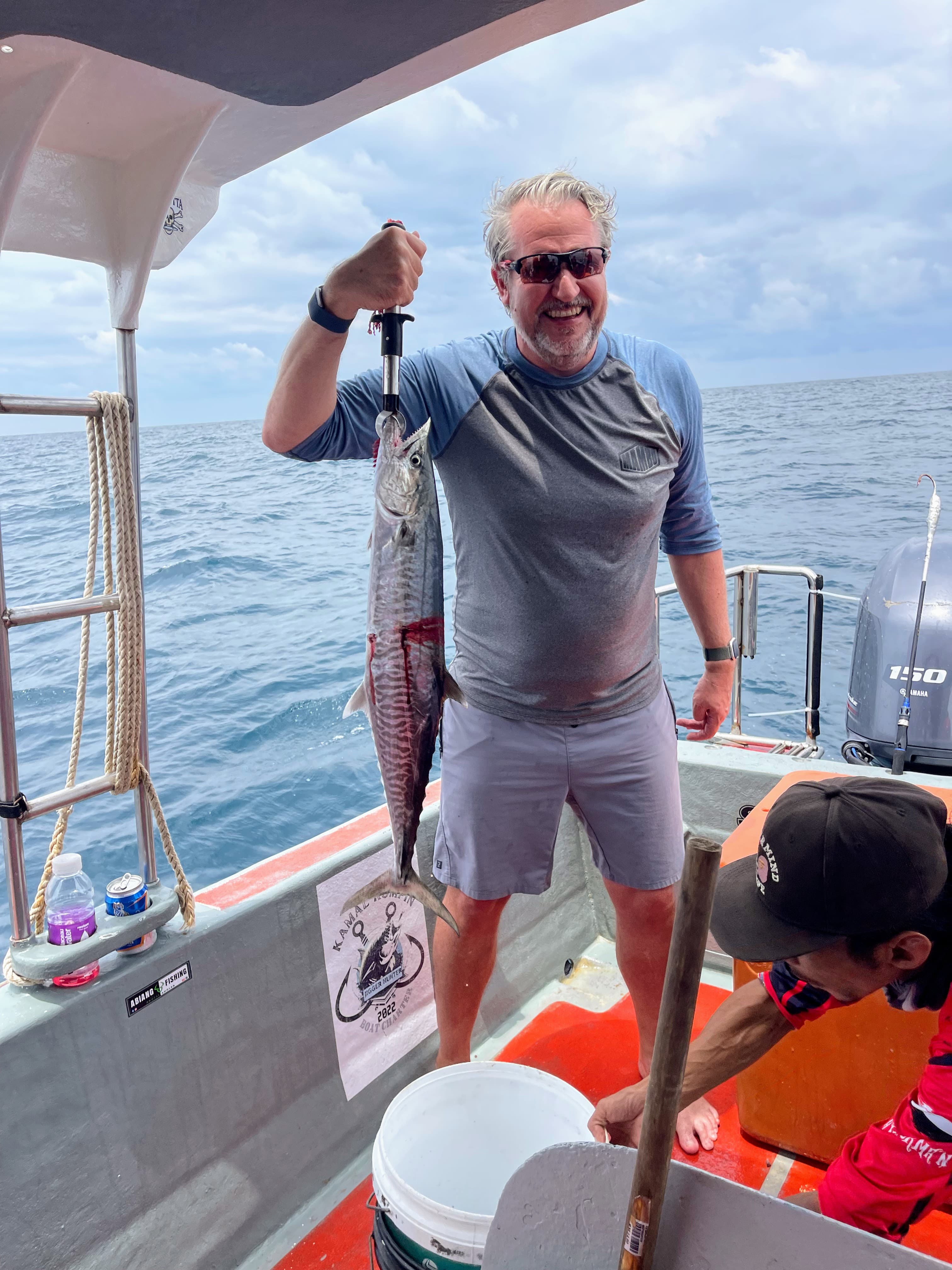
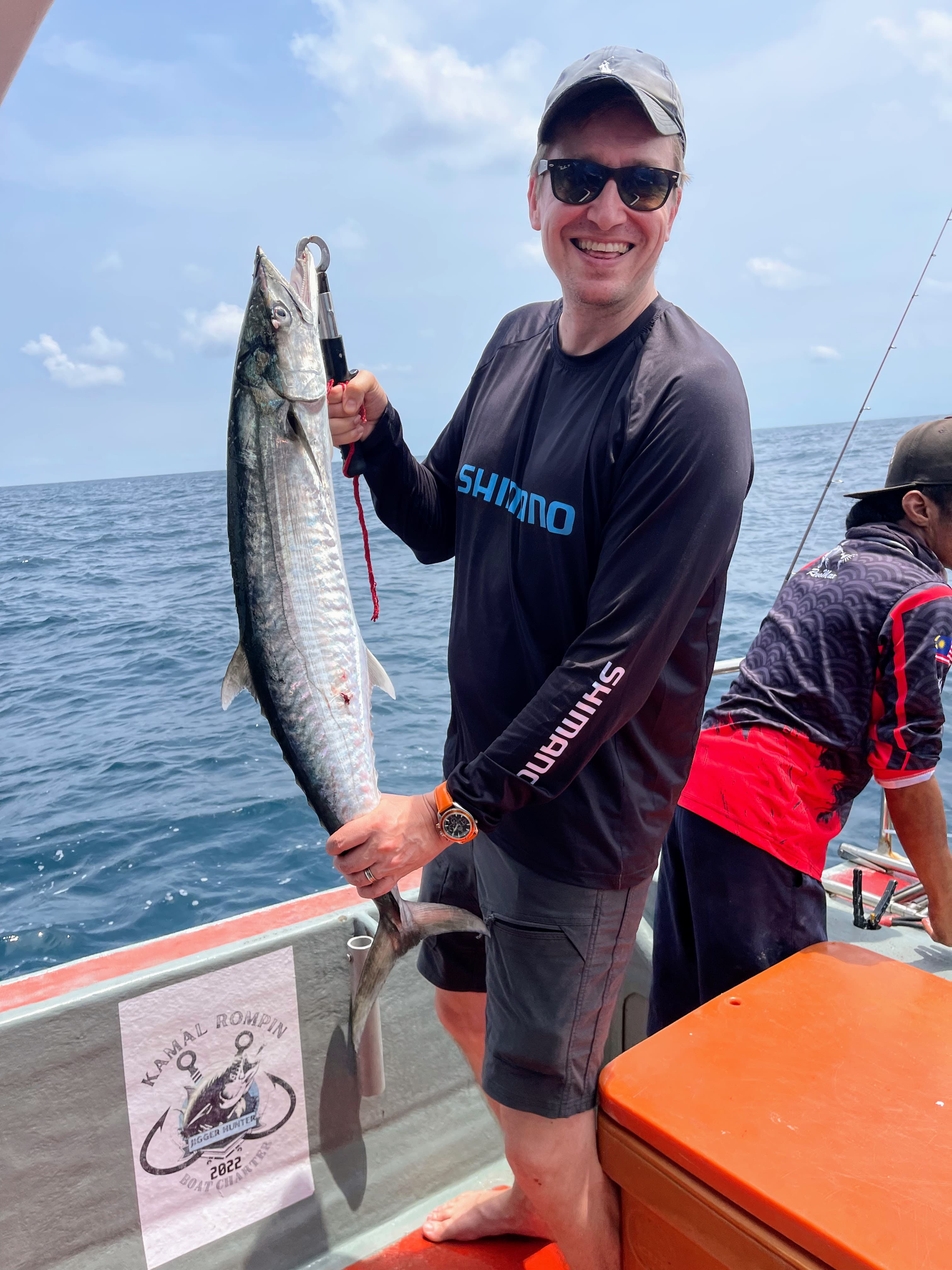
By 10:00 AM, the boys were already cracking open beers in celebration. The action didn't stop. A mid-water live bait drifting 50 meters off the stern got absolutely smoked. Because we were running straight fluorocarbon, a Spanish Mackerel made quick work of the line. We even saw it jumped out of the water when it slammed our bait, it was relatively obvious that there are fish around.
We immediately pivoted our strategy, rigging up light wire traces with a three-hook setup. The adjustment paid off instantly. Riku grabbed the rod on the next strike and landed a beautiful 7kg Spanish Mackerel. Captain Kamal hooked into another massive one on a jig shortly after, though it managed to throw the hook, leaving his worn Shimano Twin Power sideline due to suspected internal ball-bearing damage.
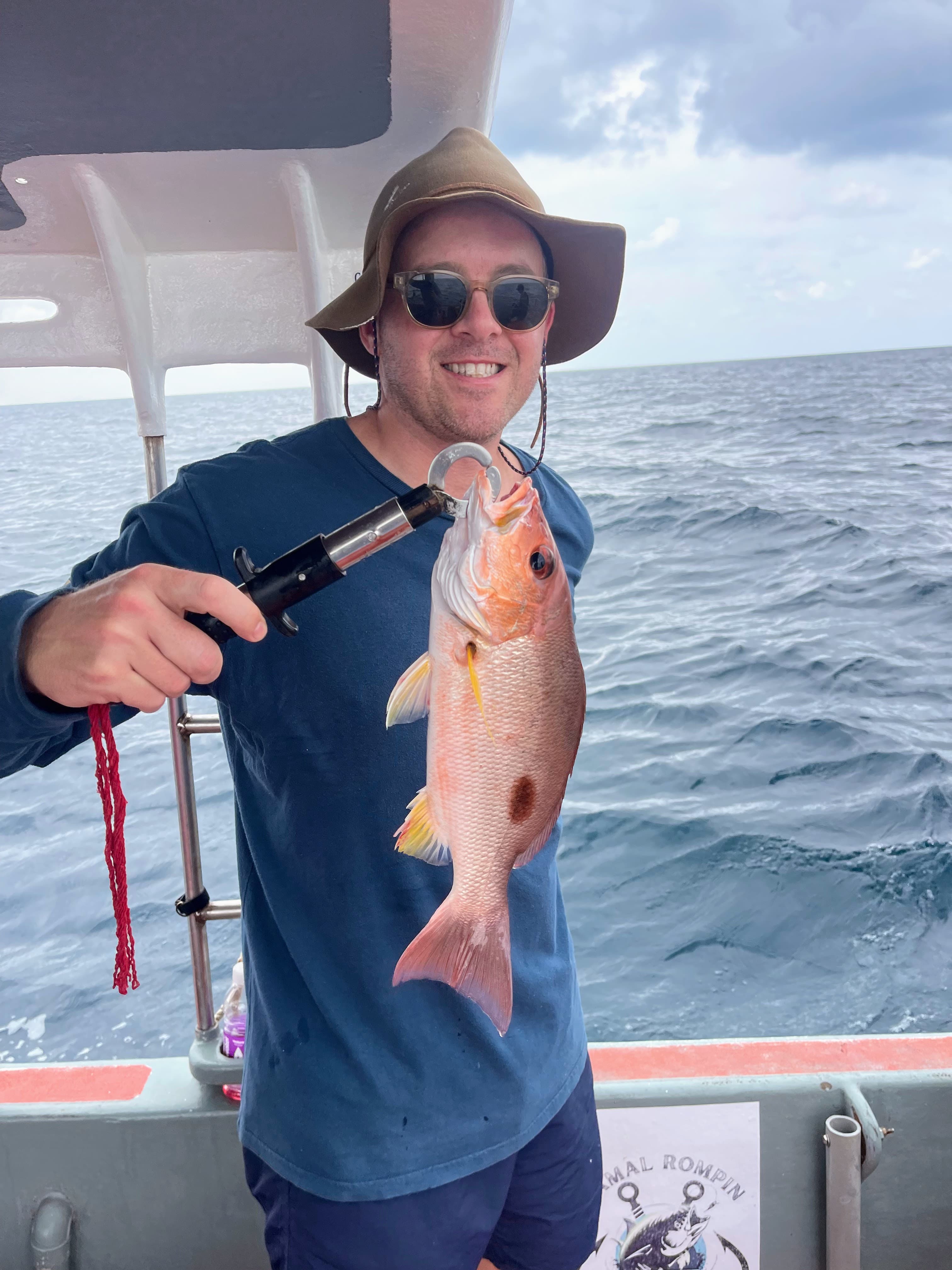
The morning remained highly productive, requiring a constant rotation of our live bait stock. The bottom rigs steadily produced beautiful Red Coral Snappers, Groupers, and even a Barracuda.
The Rare Giant Croaker (Ibu Gelama)
As the tide peaked between 12:00 PM and 1:00 PM, the water movement slowed, and naturally, so did the bite. We used this lull to grab lunch and rest.
As soon as the tide began to drop and the water moved again, the bite fired right back up. Suddenly, my heavy bottom setup—a PE 3-6 rod paired with a 6000-size reel—doubled over violently. The sheer power of the fight had us all guessing. It wasn't fighting like a Giant Trevally, nor did it feel like a massive Snapper.
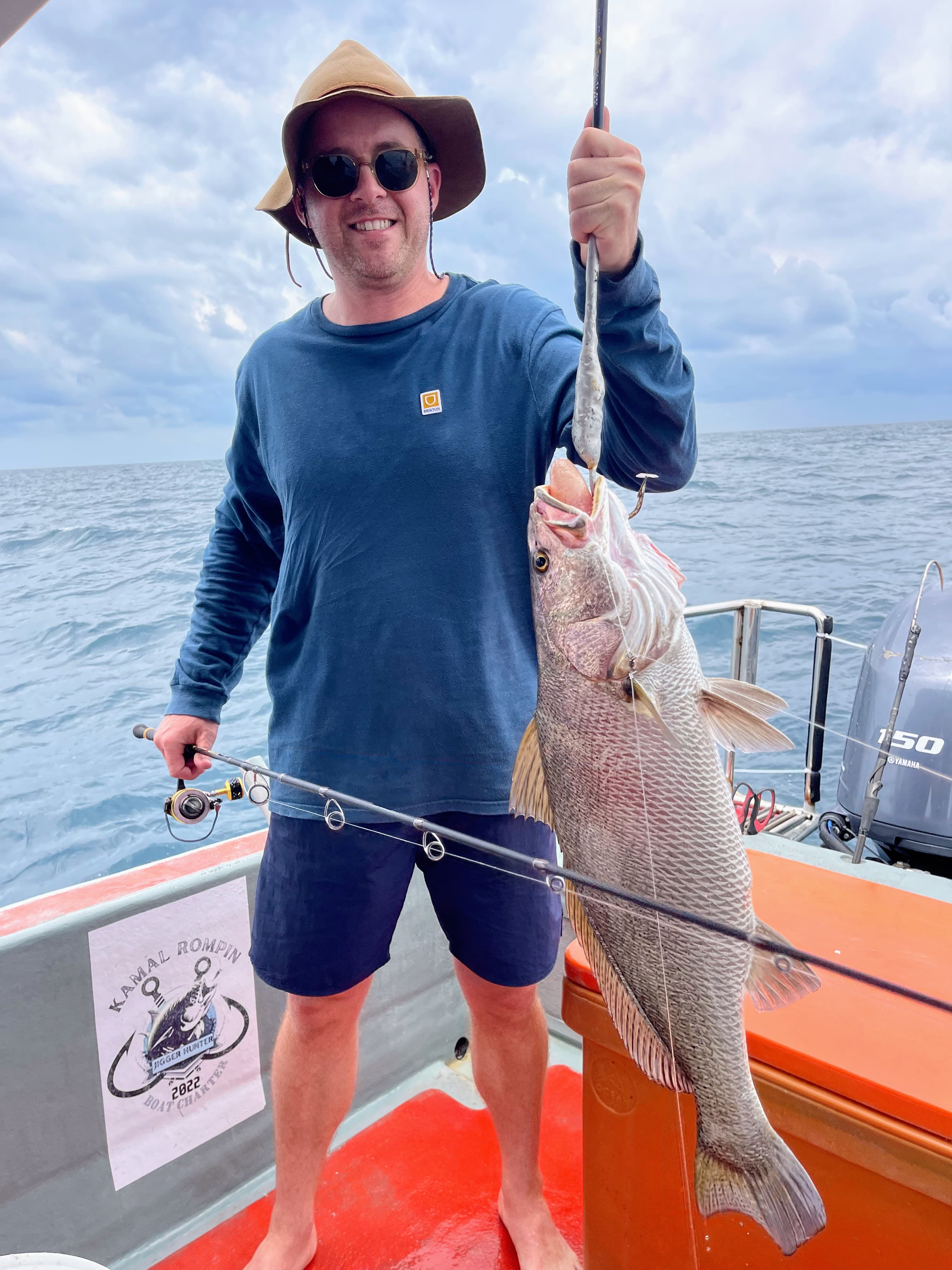
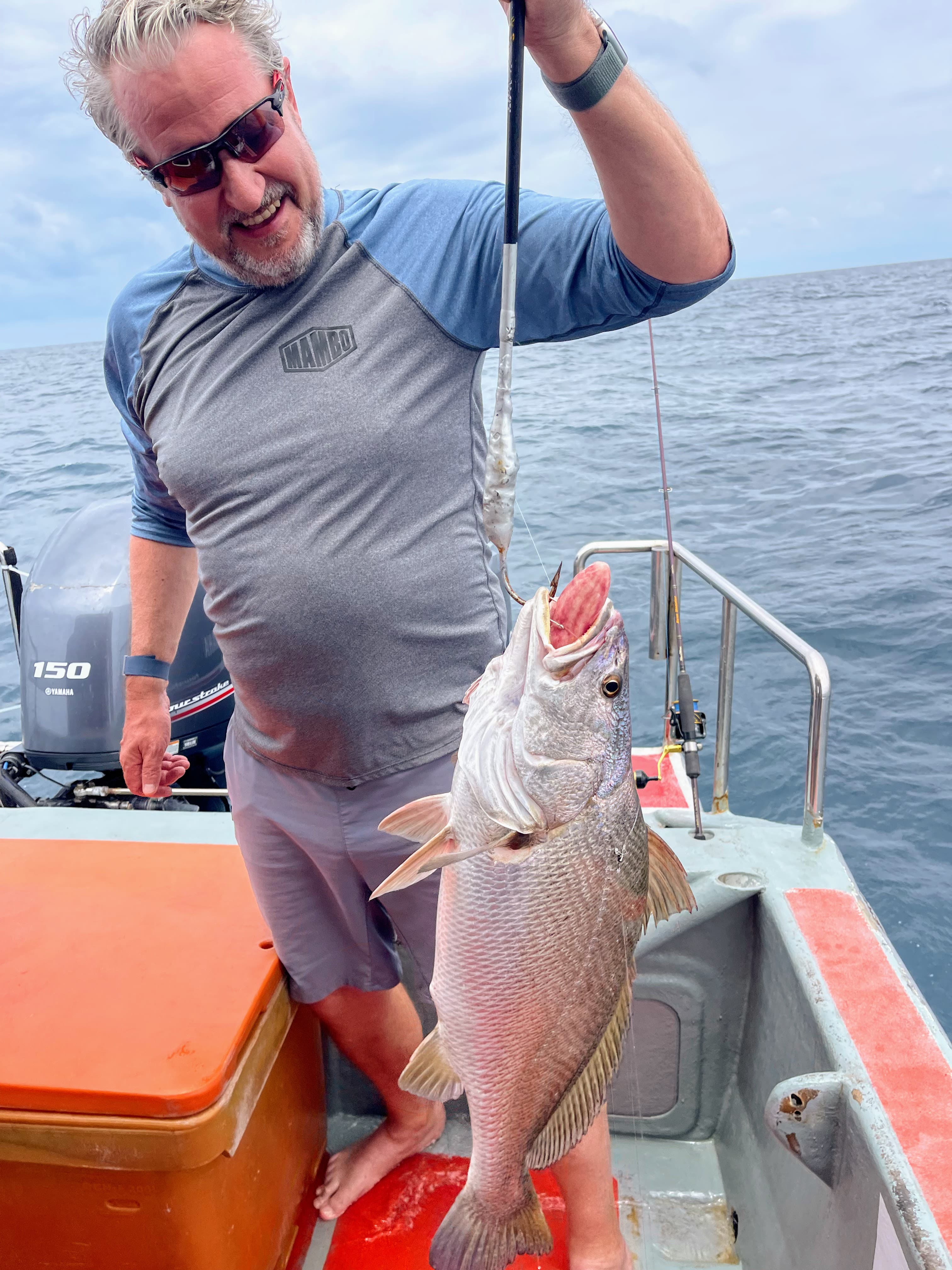
When we finally brought it over the gunwales, we were stunned. It was a massive Giant Croaker (Ibu Gelama). In coastal waters, these rarely exceed a kilogram, but out here in the deep, this specimen weighed in at a whopping 7kg. It was the first time I had ever seen one caught on our charter. Amazingly, we dropped back down and immediately pulled up a second one, weighing around 5kg.
Biology of the Blackspotted Croaker (Protonibea diacanthus)
The species we encountered, scientifically known as Protonibea diacanthus or the Blackspotted Croaker, is one of the most highly-prized members of the Sciaenidae family. Known locally as Ibu Gelama or Ghol in other regions, this benthopelagic predator can grow up to 150cm and is easily identified by its scattered black spots on the dorsal fins and upper body. Beyond its aggressive fighting capabilities, the species is globally renowned—and often extremely expensive—due to its high-quality swim bladder, which is used in traditional medicine and as a source of collagen. Finding them offshore in Kuala Rompin at these sizes indicates a healthy, nutrient-rich environment capable of supporting mature, deep-water residents.
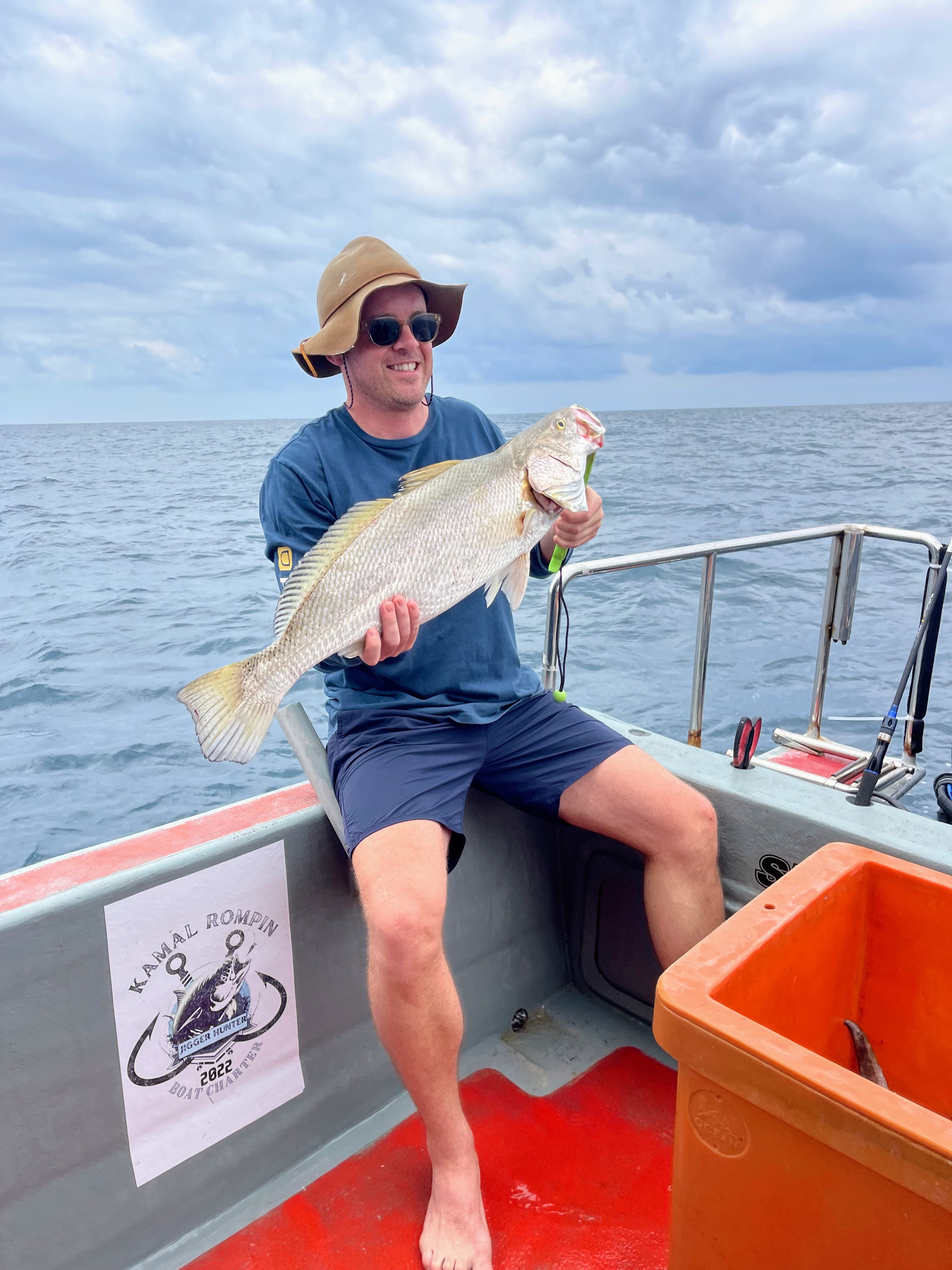
While on livebait, we scored another 2 mid-size Spanish Mackerel to end our first half tally on a high. The boys even mentioned that this was beyond their expectation. It was constant engagement and fishing happening. efore we packed up from the spot, Riku managed to pull in one last 5kg Spanish Mackerel on a drifted live bait.
Final Stop: Karang DO and the Diamond Trevally
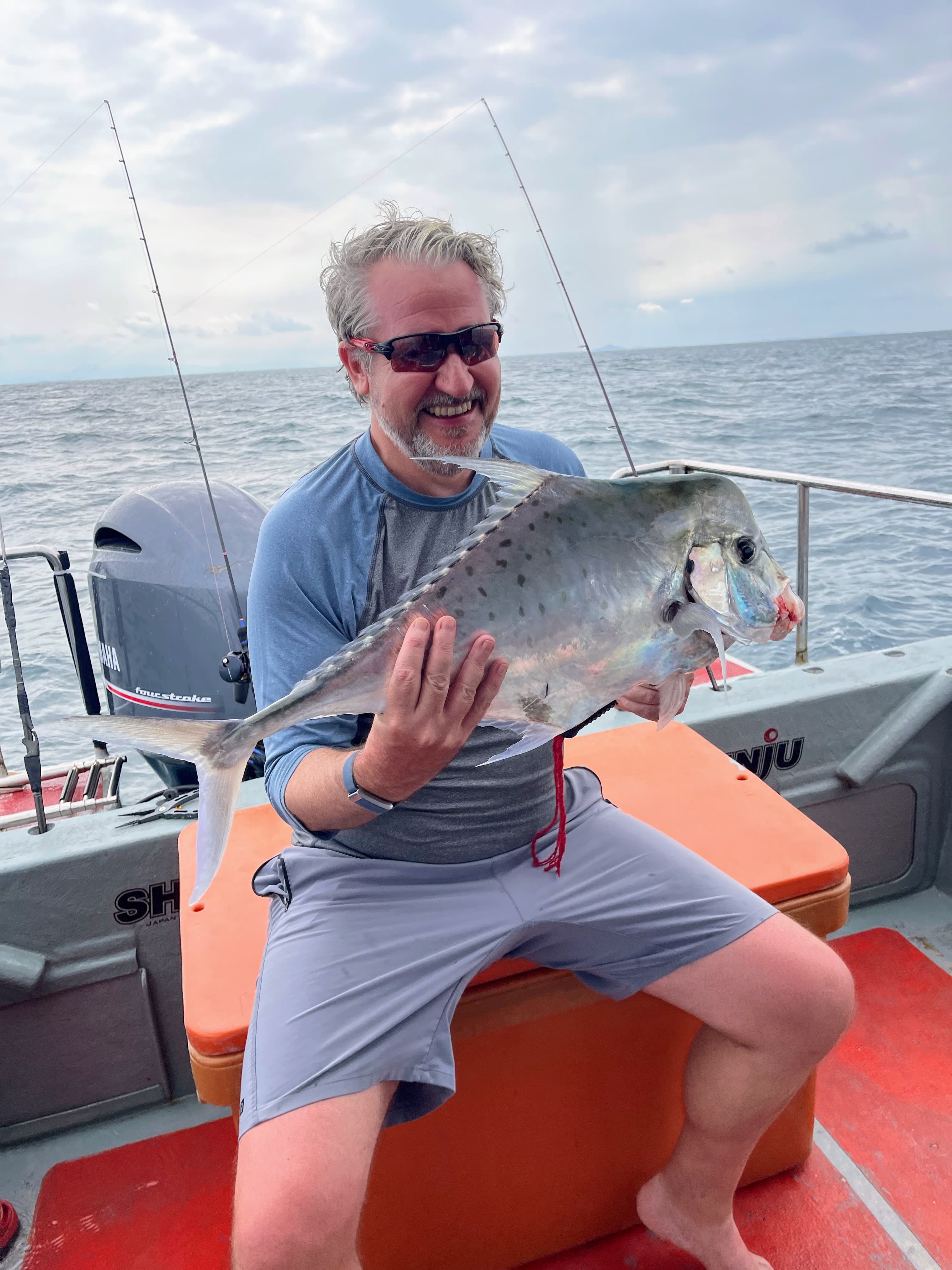
By 3:00 PM, we decided to make a one-hour run down to a final mark known as Karang DO, a spot famous for holding massive, solitary pelagics. We drifted live baits and worked our jigs, hoping for a buzzer-beating Sailfish to complete the species tally. We suffered one massive, blistering strike that ultimately pulled the hook on our wire trace—likely a monster mackerel. Just as we were calling it a day, we finally struck gold with a Diamond Trevally. Other boats in the area reported double-digit catches of Diamonds, proving they were schooling heavily in the early season.
Fishyology Pro-Tip: Capitalizing on the Tide
Success on the reef is entirely dictated by water movement. When the tide goes slack, the pelagic and bottom feeding activity almost completely shuts down. Use this time to rest, re-tie your leaders, and prep your bait. The moment the water starts pushing again—whether flooding or ebbing—ensure your baits are exactly in the strike zone. Furthermore, always have a light wire trace rig ready on standby; when the Spanish Mackerel roll in, fluorocarbon simply won't survive the initial strike.
We headed back by 4:30 PM, arriving at the jetty by 5:00 PM with coolers full and spirits high. We took the Giant Croaker straight to 'James', our favorite local spot, to have it cooked. I expected the meat to be strong or fishy, but it was incredibly sweet and delicate—half cooked in a rich curry and half fried to perfection.
It was an unforgettable start to the Kuala Rompin open season. Delivering an eight-hour trip that exceeded all expectations makes the craft so rewarding. Next up is a grueling 6-day expedition to Pulau Tioman in August. Until then, tight lines!