Malaysia Angling Industry
2.2 Million Anglers, Zero Rules: Malaysia's Recreational Fishing Blind Spot.
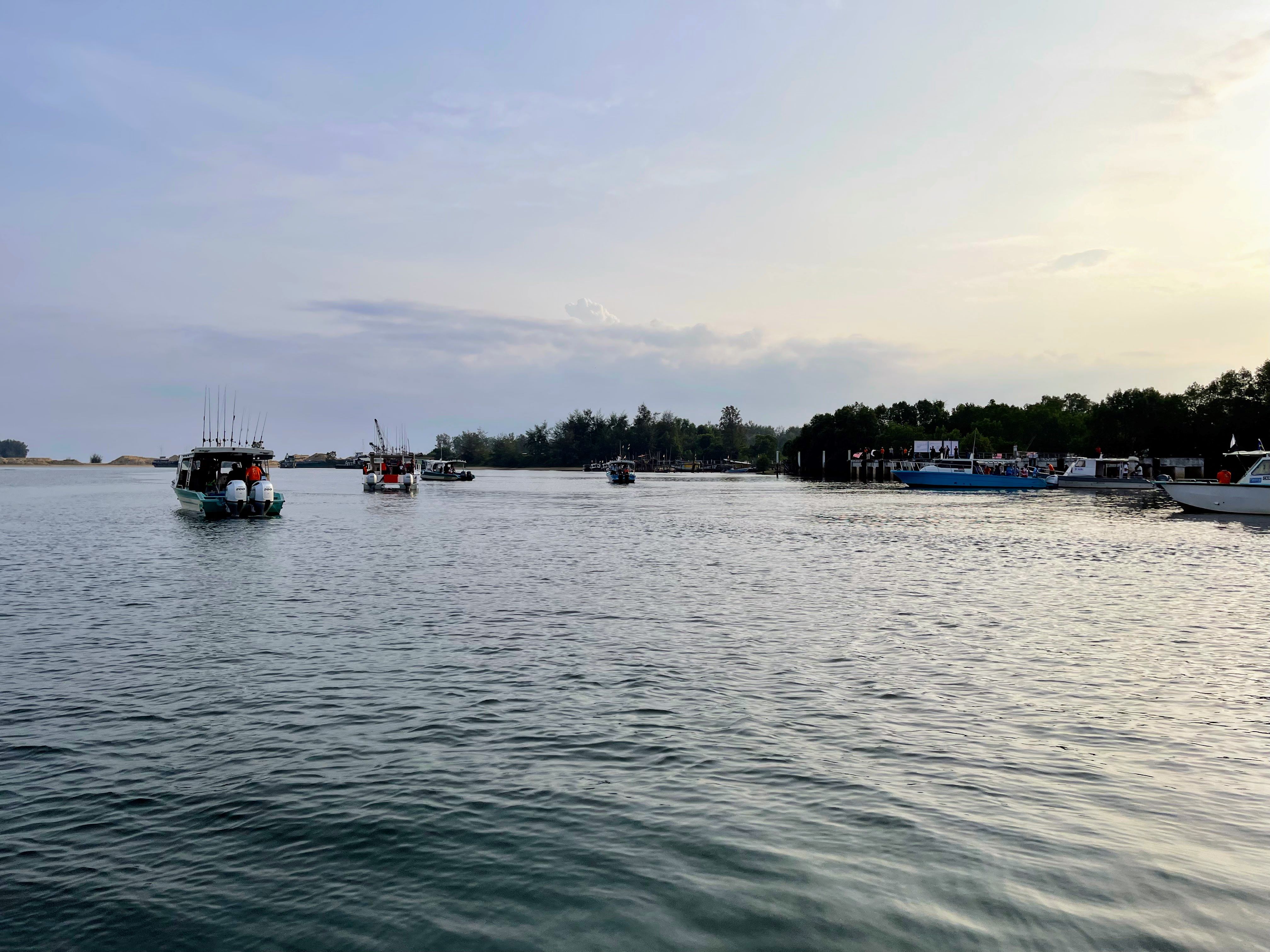
Walk down almost any jetty in Malaysia on a Saturday morning, whether in Port Dickson, Kuantan, or along the causeway in Miri, and you'll find anglers preparing to head out for a day on the water. Rods are rigged, bait is packed, and coolers are loaded. Yet there is one thing none of them is carrying: a fishing license.
That is because recreational fishing in Malaysia is essentially unregulated. There is no licensing requirement, no daily bag limit, no minimum size restrictions, and no closed fishing seasons. As long as you are outside marine parks and designated no fishing zones, you can fish freely, keep as much as you catch, and head home without ever having to interact with a government agency.
That would be a footnote if recreational fishing in Malaysia were a fringe hobby. It isn't. A 2024 study out of Universiti Malaysia Terengganu put the country's recreational fishing population at roughly 2.2 million people, with close to half of them fishing saltwater. That's a bigger angler population than the entire population of several Malaysian states. And it's the one part of the country's fisheries sector that Putrajaya has never bothered to build a framework around.
The Department That Doesn't License You
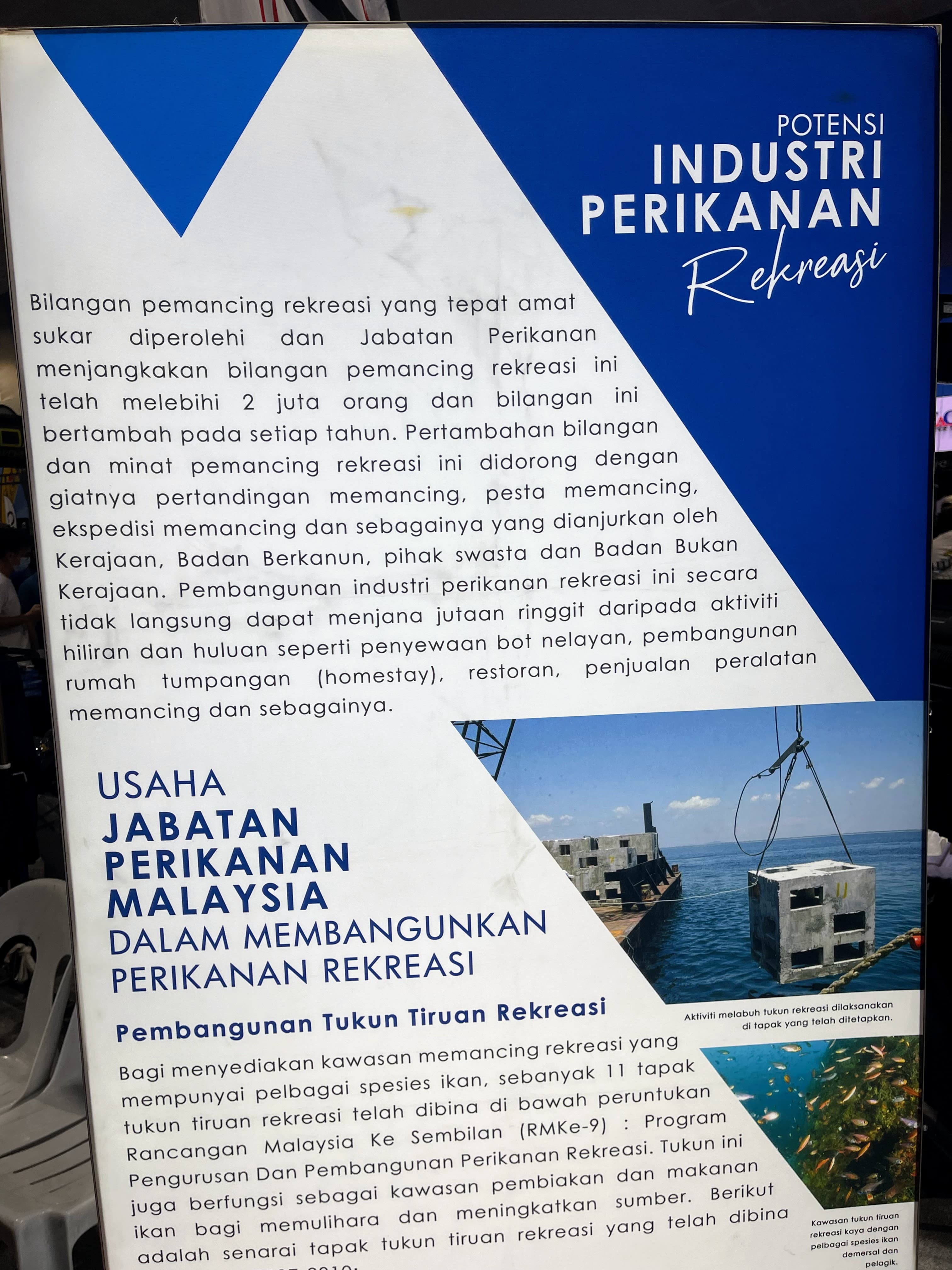
This is not so much an oversight as a structural gap. The Department of Fisheries Malaysia (DOF) licenses commercial fishing vessels and gear, and issues fisherman's cards, but only to what it defines as "genuine fishermen," meaning commercial operators. DOF's own FAQ makes it clear that it does not issue fishing licenses to recreational anglers. If you are taking paying anglers out on a boat, you need a permit from the Marine Department instead. However, that permit regulates the vessel rather than the fishing activity itself. As a result, there does not appear to be a dedicated system for routinely monitoring what recreational anglers catch, where they fish, or how much they take.
This isn't a new complaint. Back in 2017, Sarawak's state fisheries director floated a nationwide recreational license at the launch of the Miri City International Deep Sea Fishing Tournament, citing visible declines in grouper, sailfish, tuna, marlin, and snapper stocks. Sarawak's fishing clubs already had 14,269 registered anglers between Kuching, Sibu, and Miri at the time a great proof that the community was organized enough to make a licensing system workable. Nine years on, the "Malaysia Fishing" guides anglers use today still say the same thing they said in 2017: no license required, anywhere in the country.
It's worth sitting with how unusual that is regionally. Neighbouring tourism boards that compete with Malaysia for the same fly-in angler dollar have already built at least some version of a permitting layer around marine parks and protected zones. Malaysia's version of that same instinct stops at "don't fish here" signage. There's no equivalent step up to "here's what you're allowed to keep, and here's what we're doing with the fee."
What Everyone Else Is Doing Instead
Compare that to the two regulatory poles the rest of the world operates between. The United States runs what's called a user-pays conservation model: anglers buy state licenses, manufacturers pay federal excise tax on tackle and motorboat fuel, and that money with an estimated value between $1.7 and $2 billion a year are funneled straight back into habitat restoration, hatcheries, and public boat access under the Sport Fish Restoration Program. It's not a perfect system, but it means the industry that extracts fish also funds the science that keeps stocks healthy, and regulators actually know how many anglers exist and roughly what they're catching.
Europe sits at the other end. The EU's Common Fisheries Policy was built almost entirely around commercial fleets, and recreational anglers were treated as a footnote, regulated only when their catch started threatening commercial quotas. European anglers and industry bodies like the European Anglers Alliance have spent years lobbying for equal standing, and they've won real ground: mandatory registration and electronic catch reporting for certain recreational fisheries now feed into the same ICES stock assessments that used to run on commercial data alone.
Malaysia does not have the same recreational fisheries management framework as many European countries. Instead, its regulatory approach is still evolving. Recreational fishing is recognized as an important economic and social activity, and policy discussions have highlighted the need for enhanced management. However, measures such as angler licensing, catch reporting, bag limits, and size restrictions have not yet been widely implemented.
"Malaysia has just spent political capital modernizing one half of its fisheries law while leaving the other half, the one involving an estimated 2.2 million recreational anglers, exactly where it was in 2017.
"
— Noru Razak
The Money Is Already Showing Up
What makes the gap harder to defend is that the economic case for regulating this sector is no longer theoretical. Malaysia's saltwater tackle and gear market is growing on the back of tourism demand specifically. International anglers booking charter trips for sailfish, marlin, and giant trevally are a large enough segment that industry reports now track them as a distinct growth driver. Regional analysts lump Malaysia in with Thailand and Vietnam as countries where government tourism boards are actively marketing sport-fishing as a premium travel product. The global fishing tourism market itself is projected to nearly triple, from roughly US$72.5 billion in 2023 to over US$211 billion by 2033.
In other words, Malaysia is trying to sell the world on recreational fishing as a tourism product while collecting zero data on the people already doing it domestically, and zero revenue to reinvest in the fish stocks that product depends on. The same 2024 Terengganu study that measured angler numbers also asked what people would be willing to pay toward conservation. The average answer was RM10. That's not a criticism of anglers but it reflects an industry that has never asked them for anything, so nobody has had to think about what fair looks like.
A Reform That Went the Wrong Direction
If anything, the policy gap is widening rather than closing. In July 2025, Malaysia's House of Representatives passed the Fisheries (Amendment) Bill 2025, tightening enforcement against illegal, unreported, and unregulated fishing and raising penalties for foreign vessel intrusions as high as RM6 million. Deputy Agriculture and Food Security Minister Arthur Joseph Kurup framed it as bringing Malaysia in line with FAO and EU standards, and pointed to nearly RM823 million in estimated losses from foreign vessel incursions between 2020 and 2024 as the justification.
It's a reasonable bill, and commercial IUU fishing is a genuine problem worth this level of attention. But recreational fishing isn't mentioned in it at all. Malaysia has just spent political capital modernizing one half of its fisheries law while leaving the other half, the one involving an estimated 2.2 million recreational anglers, exactly where it was in 2017.
What This Actually Needs
None of this requires reinventing anything. Malaysia has two working templates close at hand: a dedicated levy and reinvestment system like the US Sport Fish Restoration Program, or a lighter touch registration and reporting system similar to those adopted in parts of Europe. Either approach would give the Department of Fisheries (DOF) something it currently lacks: a reliable picture of who is fishing, where they fish, and what they are targeting. That information is the foundation for setting bag limits, monitoring recreational fishing pressure, and protecting the species that the Sarawak fisheries director was already expressing concern about in 2017.
A lighter touch approach could begin on a modest scale and still make a meaningful difference. A free, mandatory online registration for saltwater anglers, combined with voluntary catch reporting through the charter operators and fishing clubs that already organize tournaments, would provide DOF with a far more reliable estimate of participation than the often cited figure of "roughly 2.2 million" anglers. It would also create a practical channel for conservation contributions that go beyond RM10 per angler, without requiring anyone to carry a physical fishing license.

The Sport Fish Restoration model represents a more ambitious long term goal, with an excise tax on fishing tackle dedicated exclusively to habitat restoration and fisheries management. Even a lighter registration and reporting system, however, would represent a significant step forward from the current situation, where no comparable framework exists.
The angling community is not the obstacle. Fishing clubs in Sarawak have already shown that anglers are willing to register when there is a clear purpose. The Terengganu survey suggests that many recreational fishers understand the importance of conservation, even if the RM10 contribution understates what they might be willing to support if asked through a well designed program. The missing ingredient is not public willingness. It is the absence of a policy that treats Malaysia's estimated 2.2 million recreational anglers as stakeholders in fisheries management rather than simply a statistic cited to illustrate the sector's economic value.
That is the real cost of the blind spot. It is not that recreational anglers are necessarily doing anything wrong on the water. It is that the agency responsible for managing Malaysia's fisheries has limited information on whether grouper, sailfish, snapper, and other recreationally important species can sustain current fishing pressure. Nearly a decade after the concerns raised in Miri, recreational fishing has continued to grow. The management framework has not kept pace.
Sources
- Department of Fisheries Malaysia — Licensing FAQ
- Shaari, N.F. et al., "Examining The Economic Value and Awareness for Recreational Fishing: A Study Case of Kuala Nerus, Terengganu," BIO Web of Conferences, Vol. 131 (2024) — DOAJ link
- "Licence for recreational sports fishing proposed," The Borneo Post, 12 May 2017 — via PressReader
- "Malaysia moves to toughen fisheries law, minimize IUU losses," SeafoodSource, 11 August 2025 — link
- Stellar Enterprises Market — Malaysia Saltwater Fishing Gear and Tackle Market
- Dataintelo — Fishing Gear Market Report (Southeast Asia tourism-driven growth)
- Angling International — Fishing tourism could offer industry new growth sector, 9 January 2025
- American Sportfishing Association — economic impact and Sport Fish Restoration Program funding figures, as cited in A Global Synthesis of the Sports Fishing Industry (2026 research compilation), sourced from asafishing.org
- North Sea Advisory Council / NWWAC — Advice on Recreational Fisheries, EU Common Fisheries Policy context, as cited in A Global Synthesis of the Sports Fishing Industry (2026 research compilation)
- Department of Fisheries Malaysia — https://www.dof.gov.my/perkhidmatan/perikanan-tangkapan/pendaftaran-perikanan-rekreasi-sistem-erekreasi/
