Fishyology Insight
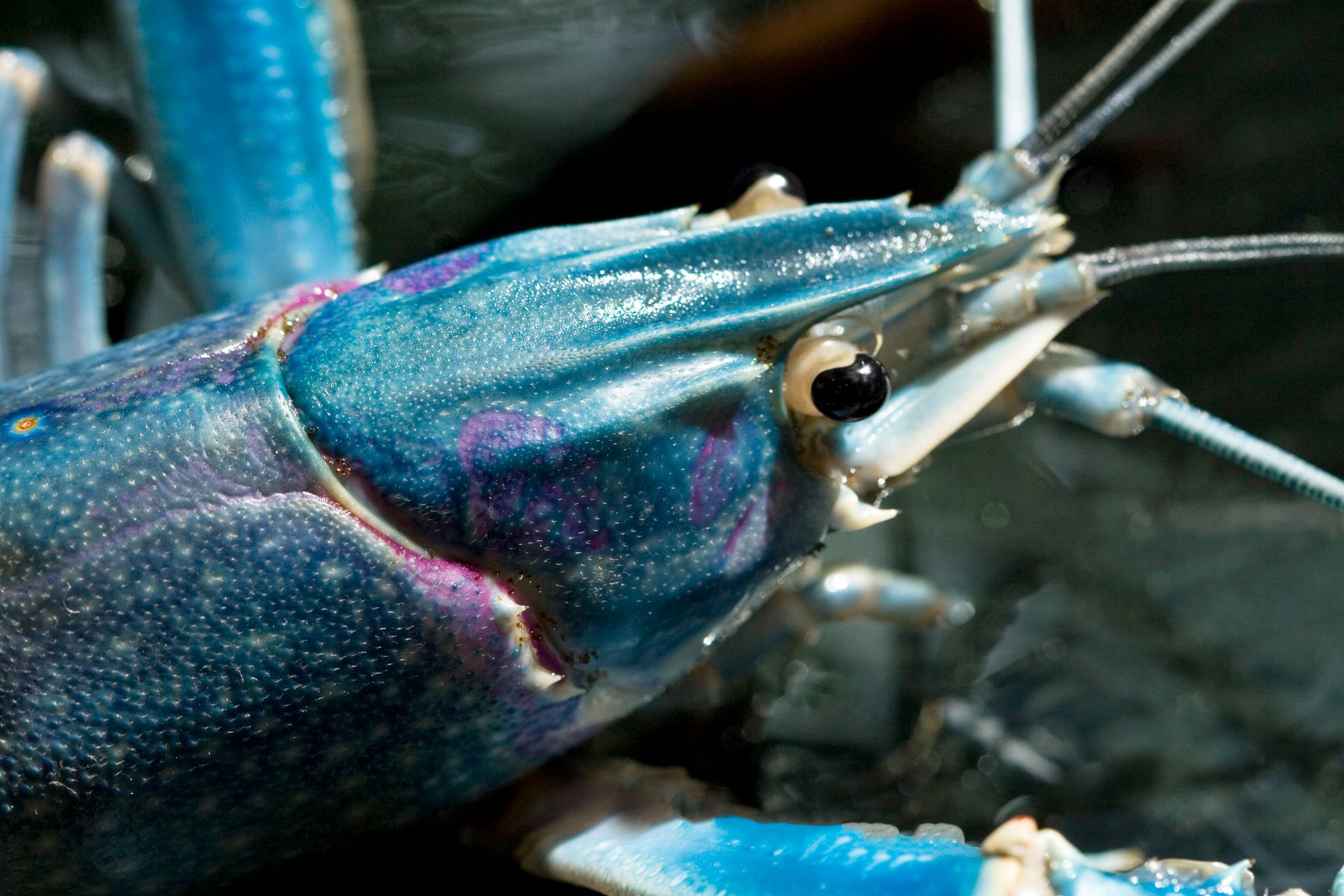
For more than forty years, a crayfish from northern Australia has been living in Malaysian rivers. Cherax quadricarinatus, the redclaw, sold locally as freshwater lobster or blue lobster, arrived in the early 1980s for aquaculture and the aquarium trade. It now has feral populations across Peninsular and East Malaysia (Tengku Zainal Abidin et al., 2023; Dali et al., 2023, Malaysian Applied Biology). Anglers catch it as bycatch, trap it for the pot, and use it as bait. What the research cannot yet say, after four decades, is how much harm it is actually doing.
Nemo assembled this piece from a body of literature compiled and summarized via Scopus AI, then matched each claim to the study the report cites for it. That matching mattered more than usual here. A large share of the report's ecological and economic claims about the redclaw rest on studies of alien fish, of general aquaculture, or of crayfish in Africa. Where a claim leans on evidence from somewhere else, the text below says so. The aim is to separate what is documented in Malaysian water from what is reasonable to expect but not yet measured.
Scope and Method of the Synthesis
The literature runs from the 1980s to 2024 and spans ecology, fisheries science, aquaculture, socio-economics and policy. Its methods include mitochondrial DNA studies of population structure, GIS and environmental DNA (eDNA) surveys of distribution, parasite identification on wild and farmed animals, aquaculture performance trials and policy review.
The source report is unusually candid about its own limits, and they govern everything after this paragraph. Most ecological impacts attributed to the redclaw are inferred from related invasive species, because direct studies in Malaysia are scarce. Economic losses and gains have not been quantified; the evidence is qualitative or comes from aquaculture performance. Disease transmission to native species is flagged as a risk, but no case has been documented. And judgments about legal and management effectiveness come from policy reviews, not enforcement data.
Put plainly: the spread of the redclaw is well documented. Its effects mostly are not.
How It Spread, and Who Moved It
The pathway story is the most solid part of the literature. The redclaw came in through aquaculture and the ornamental trade, and the evidence points to people, not rivers, as the main engine of its spread (Naqiuddin et al., 2016). Escapes from farms, releases by aquarists who no longer want an animal that outgrows its tank, and connected waterways all move it onward. The same pattern has played out next door: the species is now widespread throughout Indonesia (Patoka et al., 2018).
Genetics tell the same story from a different angle. Studies of wild populations across Peninsular Malaysia using the 16S and COI mitochondrial markers find low genetic diversity and limited haplotype variation (Mohd Dali et al., 2021; Dali et al., 2023, Malaysian Applied Biology). That is the signature of a founder effect: today's populations descend from a small number of introduced animals, repeatedly redistributed by people. A natural invasion spreading on its own would usually leave more genetic structure behind.
Low diversity is often read as a weakness in an invader. Here it has not visibly slowed the species down, and the researchers frame it mainly as a tool. Because populations are genetically similar, tracking genetic variation can help show where new populations came from, which is the information a containment effort needs.
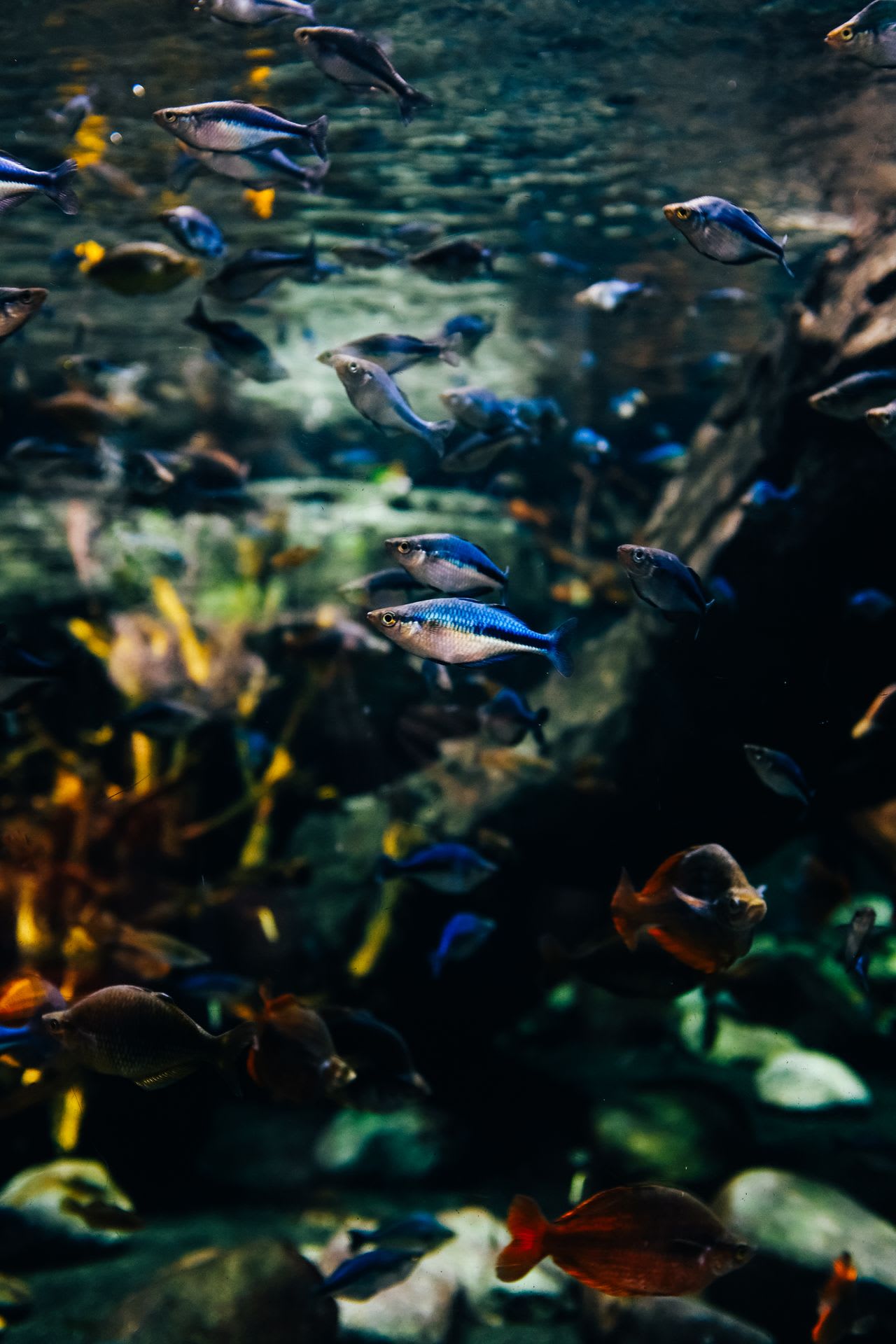
is when the redclaw was introduced to Malaysia for aquaculture and the aquarium trade. Feral populations now occur in both Peninsular and East Malaysia.
The low genetic diversity of wild populations points to a small founding stock spread repeatedly by human hands.
Source: Tengku Zainal Abidin et al., 2023; Dali et al., 2023
Mapping Where It Lives
The most concrete distribution work is from Terengganu, where Dali et al. (2023, Sains Malaysiana) combined GIS habitat modeling with eDNA analysis to predict where the redclaw occurs. eDNA detects a species from the genetic traces it sheds into water, so a survey team can confirm presence without trapping a single animal. It suits a crayfish that hides in burrows and under cover by day.
That study is one state. The report offers no comparable map for the rest of the Peninsula or for Sabah and Sarawak, so the national picture remains a patchwork of records rather than a measured range. The species' tolerance helps explain why it turns up so widely. A genome assembly of the redclaw points to immune adaptations and tolerance of low oxygen (Liu et al., 2024), and the report links that tolerance to the species' ability to persist in polluted and disturbed water. Those are the same degraded lowland rivers where alien fish already dominate.
The Hitchhikers It Carries
The best-documented biological finding in the Malaysian literature is not about the crayfish itself but about what rides on it. Temnocephalids are small flatworms that live on crayfish. The report treats the ones found on Malaysian redclaw as co-introduced with their host.
Researchers have now made the first molecular identification of Craspedella pedum on both wild and cultured redclaw in Malaysian freshwaters (Azri-Shah et al., 2023), and identified Diceratocephala boschmai and a Decadidymus species on the same host in wild and farmed settings (Hassan et al., 2022). A separate study recorded the prevalence of temnocephalids on cultured and wild redclaw across the country (Hassan et al., 2023).
The point for native species is co-introduction. An invader that arrives with its own symbionts can, in principle, pass them to local crustaceans that have no history with them. The report is explicit that this has not been shown: there are no documented cases of transmission from redclaw to native species. The flatworms are present, they are in the wild as well as on farms, and that is where the evidence stops. Monitoring is the reasonable response, not alarm.
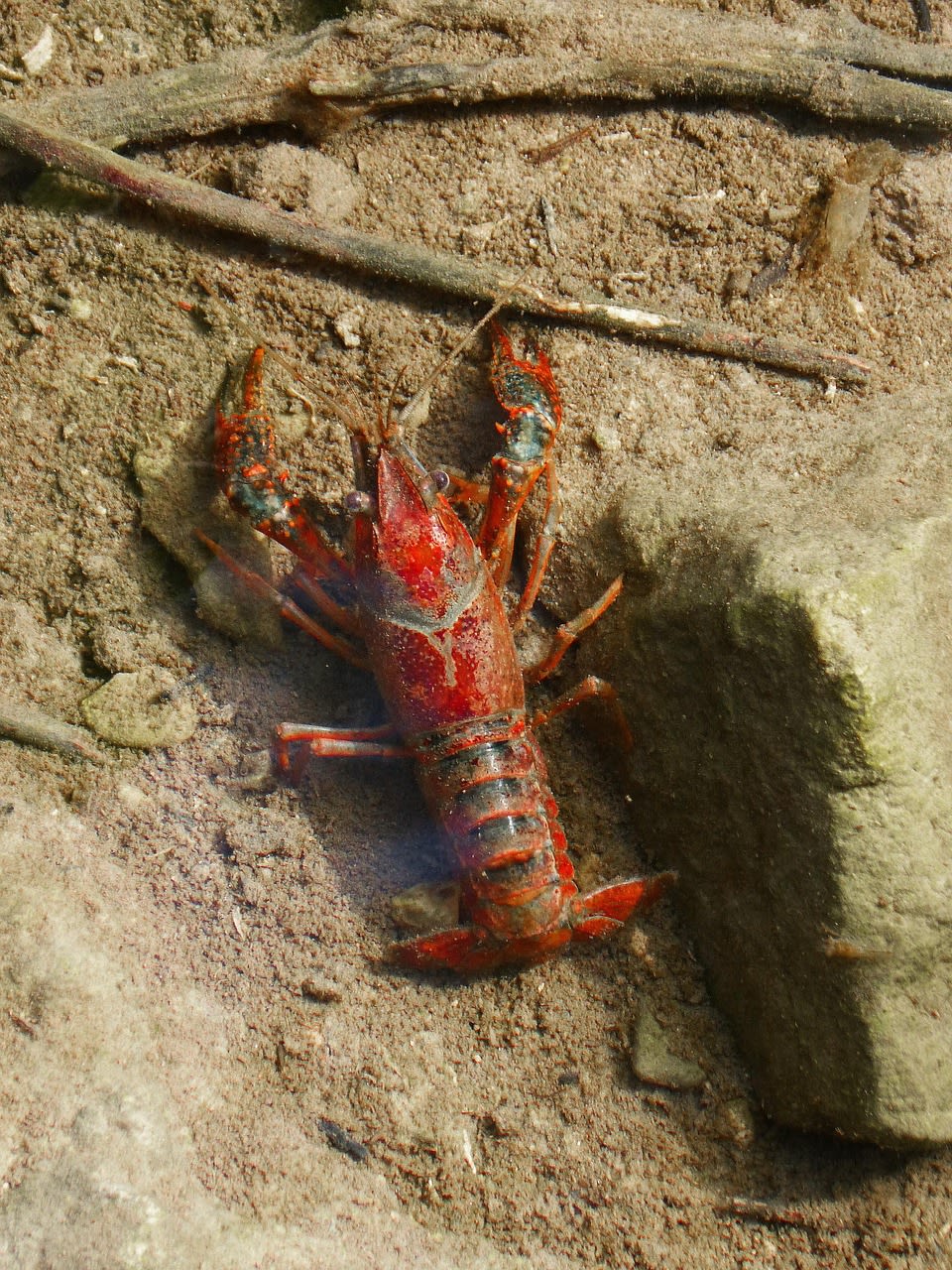
documented cases of parasite or disease transmission from redclaw to native Malaysian species, despite co-introduced temnocephalid flatworms confirmed on wild populations.
Absence of a documented case is not evidence of safety. It reflects how little anyone has looked.
Source: Scopus AI synthesis of the redclaw literature
What the Ecological Case Rests On
The source report describes the redclaw as an ecosystem engineer that alters habitat, outcompetes natives, disrupts nutrient cycling and reduces biodiversity. Nemo does not repeat that case at face value, because most of its supporting citations are about something else.
The claims that the redclaw alters habitat and reduces native diversity are cited to studies of invasive and alien fish in Malaysian freshwater, not of crayfish. The claim that its feeding on plants and detritus alters nutrient cycling rests on a diet study from Lake Kariba in southern Africa, using stomach contents and stable isotopes (Marufu et al., 2018), and the report itself notes that direct evidence for nutrient effects is lacking. The most directly relevant work on competition is a study of a native freshwater crab and an invasive crayfish in tropical Southeast Asia (Zeng, Shakir & Yeo, 2019), but the report does not summarize its result, and Nemo will not guess at it.
None of this makes the ecological concern wrong. A large, omnivorous, burrowing crustacean that tolerates poor water is a plausible threat to native crabs, shrimps and small fish. The report states the honest version itself: there are no direct reports of native species being displaced in Malaysia, but the risk is significant given the redclaw's advantage in disturbed habitats (Naqiuddin et al., 2016). That is a hypothesis with good grounds, not a finding.
"The redclaw's spread through Malaysia is documented in its genes. Its damage to native water is, so far, documented mostly in other places and other species.
"
— Nemo, Fishyology Insight
The Same Animal Is Also a Livelihood
The redclaw differs from most invasive species in one important way: people want it. It is valued for its nutritional profile and market potential (Tengku Zainal Abidin et al., 2023), and it underpins small community enterprises. In Sabah, the Freshwater Lobster Production Green Aquaponics Perennial System was set up as a community-based social enterprise for B40 households, the country's lowest income group (Mohammed et al., 2021).
The report calls this a dual impact: a threat to traditional fisheries and an aquaculture opportunity. Neither side is measured. The fisheries threat is cited to general studies of declining Malaysian fishery resources and of COVID-19 disruption, not to redclaw data. Abroad, researchers have examined the socio-economic impacts of the species around Lake Kariba (Chakandinakira et al., 2023), but Malaysia has no equivalent assessment. Farming it is also not without problems: parasite infestation and low genetic diversity are named as challenges to sustainable culture.
Management: Tools Without a Framework
Malaysian law on alien aquatic species is fragmented and weakly enforced (Ahmad, Ramzi Sulaiman & Abu Hasan, 2021), and the report finds that escape-prevention protocols for crayfish farms are not well documented.
Two further claims in the report need narrowing. It proposes rapid LAMP assays to support enforcement, but the kit it cites was built to identify selected invasive alien fish, not crayfish (Vythalingam, Hossain & Bhassu, 2021). A crayfish-specific field test would have to be developed. And the report's recommendation of biological control rests on a general cost-benefit study of invasive species control in protected ecosystems, not on any trial against crayfish. No study here tests a control method for redclaw in Malaysian water. The eDNA work in Terengganu is the closest thing to a ready monitoring tool.
Applied Significance for Malaysian Anglers
For anglers, the redclaw is unusual: an invasive species that many already harvest, eat and fish with. Nothing in this literature argues against removing redclaw from water where it is established. The pathway research points at a different behaviour. Every new population traces back to someone moving live animals, whether from a farm, an aquarium or a bait bucket. Carrying live redclaw to a new pond, stream or reservoir, particularly in East Malaysia where survey data are thinnest, is precisely the human-mediated spread that the genetic studies record.
The second contribution is information. The research gaps the report lists are concrete: whether redclaw actually displaces native crabs and shrimps in Malaysian rivers, whether its flatworms reach native hosts, and where it occurs outside the few surveyed states. Anglers who trap, bait with or simply notice redclaw are often the first to see it in a new stretch of water. A photographed catch with a location attached is a distribution record the published maps do not yet have.
After forty years, the redclaw is a permanent part of Malaysian freshwater. Whether it becomes a measured problem or remains an assumed one depends on whether anyone records what it is doing while there is still native fauna left to compare against.