Fishyology Insight
More than half of Malaysia's annual offshore fishery landings are sustained by species that depend on mangroves at some stage of life, and the country's mangroves are estimated to produce more than 700 billion juvenile fish and invertebrates a year (Chong, 2007; Sasekumar et al., 1992). Those forests cover over 500,000 hectares, mostly along the west coast of Peninsular Malaysia and in Sabah and Sarawak. Every angler who fishes a muddy creek mouth at the turn of the tide is fishing the front edge of that system. So is every trawler working the shelf beyond it.
Nemo assembled this piece from a body of literature compiled and summarized via Scopus AI, then matched each claim to the study the report cites for it. Most of the core ecology holds up well: it rests on decades of Malaysian field work, much of it from the Matang and Selangor mangroves. Some of the report's claims about pollution, salinity and restoration do not, because the studies attached to them were done in tanks, in freshwater ponds, on artificial reefs or in Indonesia. Where that happens, the text says so.
Scope and Method of the Synthesis
The literature runs mainly from 2010 to 2024, with older foundational studies reaching back to 1990. It covers ecology, fisheries science, hydrology, environmental management, socio-economics and policy, and its methods include netting and trapping surveys, eDNA metabarcoding, stable isotope analysis of diets, hydrodynamic modeling, satellite and drone remote sensing, and community interviews.
The source report names four limitations, and they shape how the rest should be read. Most studies come from Peninsular Malaysia, with only selected sites in Sabah and Sarawak. Quantitative data on recruitment and biodiversity are often site-specific and may not generalize. Long-term climate and restoration impacts are projected rather than measured. Socio-economic research is still emerging.
Nemo adds a fifth. The two figures that headline this piece, the share of landings and the 700 billion juveniles, come from work published between 1992 and 2007. They remain the figures the literature cites, but they describe a coastline that has lost mangrove since, and nobody in this body of work has recalculated them.
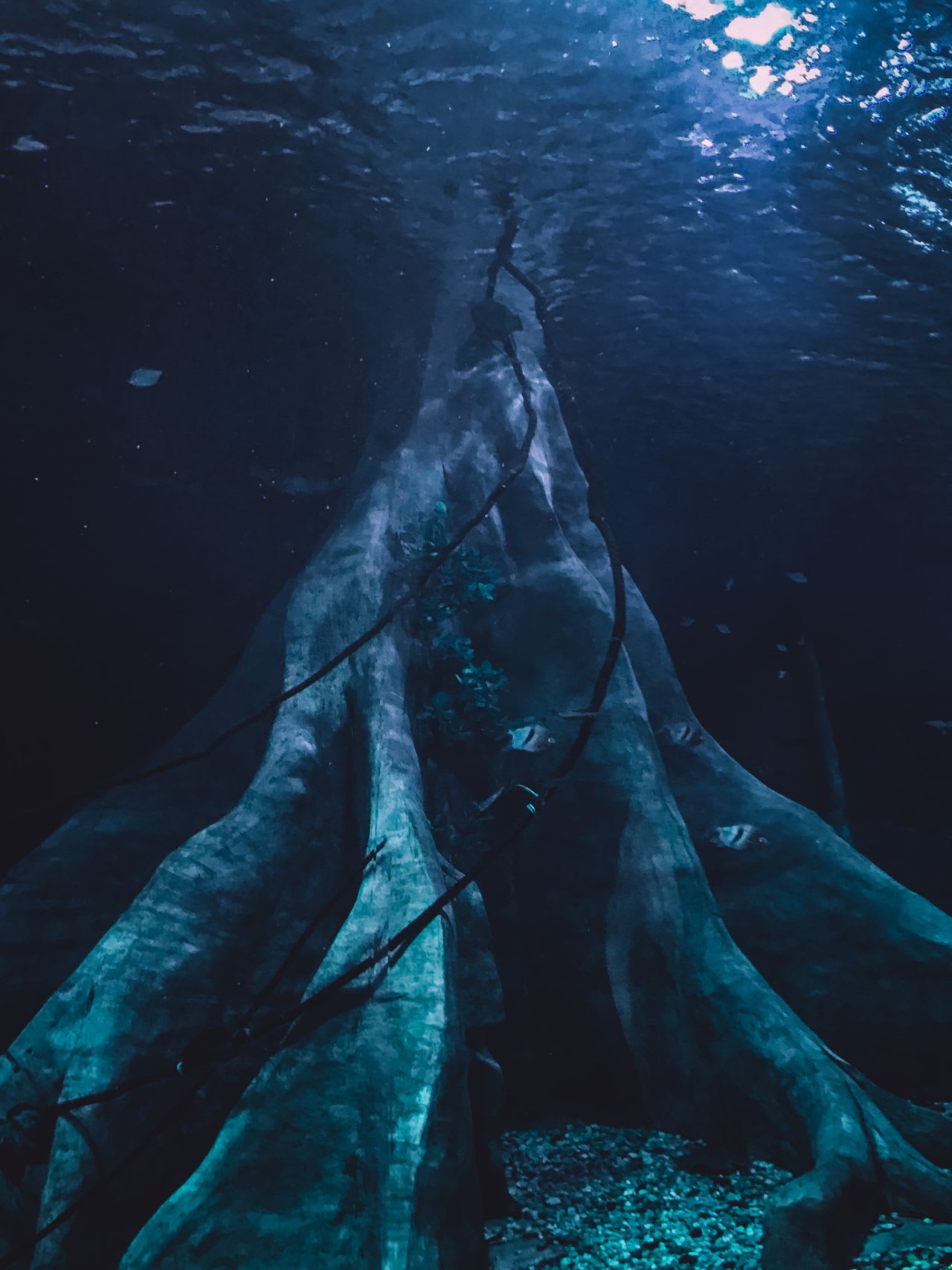
juvenile fish and invertebrates are estimated to be produced each year in Malaysian mangroves.
The number is large because a mangrove creek is a nursery, and nurseries are measured in juveniles, most of which will never reach the size an angler would keep.
Source: Chong, 2007; Sasekumar et al., 1992
Nursery for Prawns, Larder for Fish
The single most useful finding for an angler is a distinction the report makes almost in passing. Mangroves are more critical as nurseries for prawns and as feeding grounds for fish (Sasekumar et al., 1992; Chong et al., 1990).
The early comparative work set mangrove creeks against adjacent mudflats and inshore waters on the Selangor coast and found distinct fish and prawn communities in each (Chong et al., 1990). The banana prawn, Penaeus merguiensis, illustrates the nursery side. In the Matang mangroves its postlarvae and juveniles recruit into the forest in numbers that vary with environmental conditions (Ahmad Adnan, Loneragan & Connolly, 2002). Fish use the same water differently. The spotted scat, Scatophagus argus, moves through the Matang estuary in a migratory pattern that researchers traced using stable isotopes in its tissues (Morioka et al., 2020).
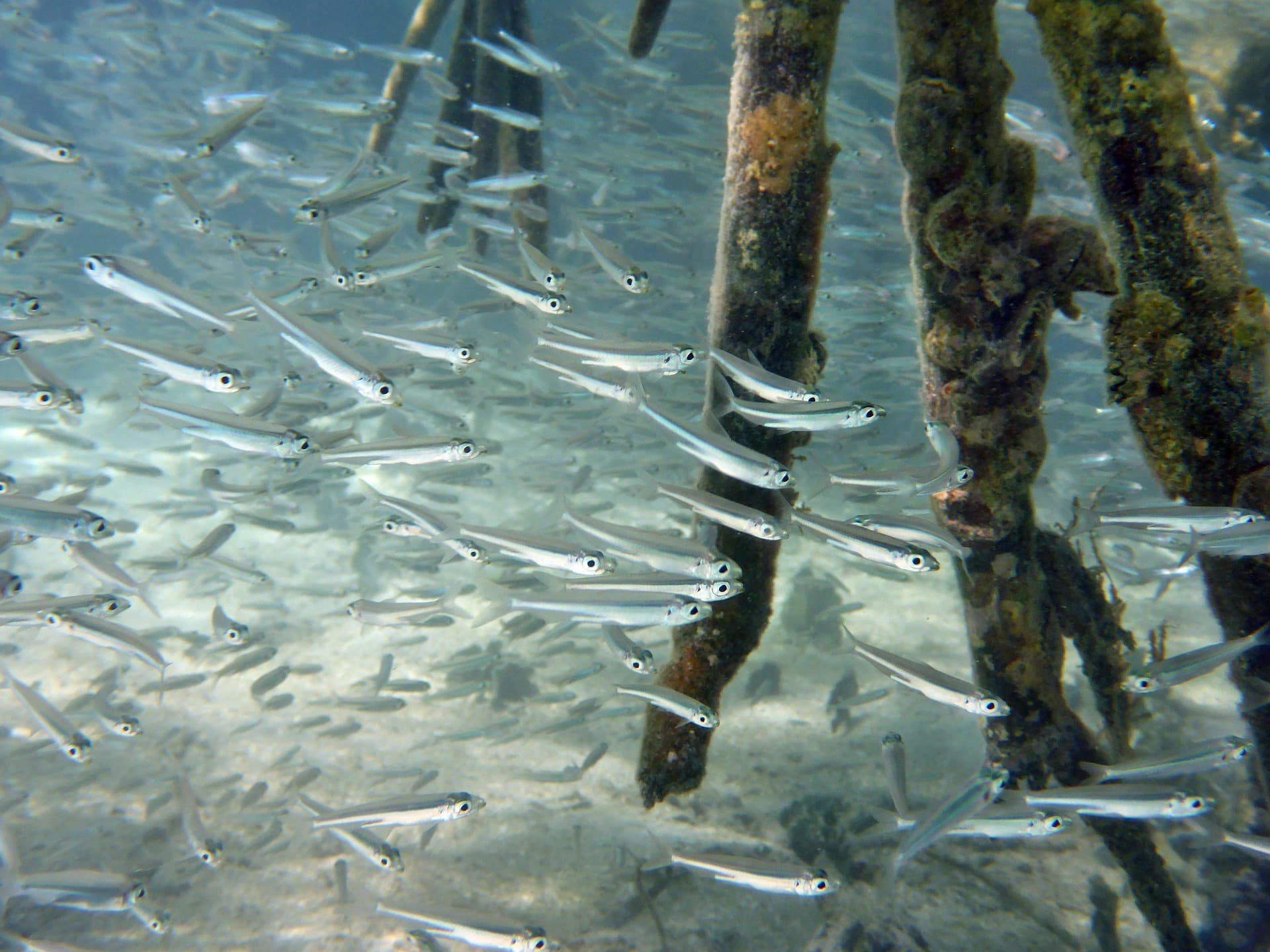
For anyone fishing these creeks, that distinction matters. Many of the fish in the channel are there to eat, and much of what they are eating is prawn and other small fauna that the forest produced. The report notes that degradation hits prawn recruitment disproportionately (Sasekumar et al., 1992; Chong et al., 1990). Lose the prawn nursery and the predators that come in to feed on it lose their reason to come.
What Feeds the Food Web
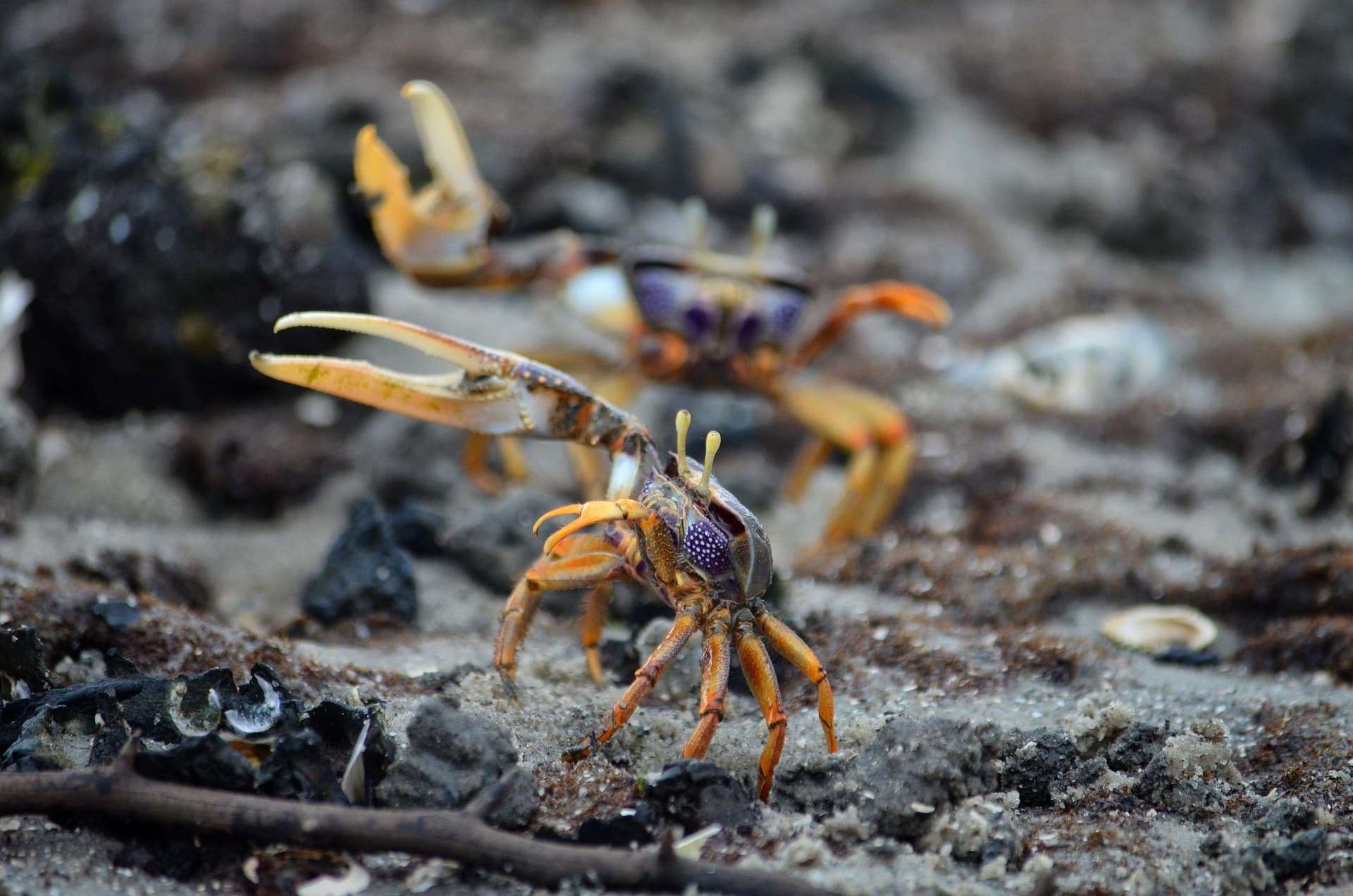
Beneath the prawns sits a layer of benthic invertebrates: polychaete worms, gastropods and crabs. The report notes that their diversity and abundance shift with sediment type, organic content and season, which in turn shapes how much food is available to juvenile fish and prawns.
The source report states that stable isotope studies confirm mangrove-derived carbon as a major energy source for this web. Its own citations complicate that. A dual stable isotope study in a Malaysian mangrove did trace mangrove detritus into juvenile prawn nutrition (Chong, Low & Ichikawa, 2001). But a later study, by largely the same research group, is titled for the finding that phytoplankton fuels the energy flow from zooplankton to small fish and shrimp in turbid mangrove waters (Chew et al., 2012). The defensible reading is that the mangrove food web runs on more than fallen leaves. The forest supplies detritus, structure and shelter; plankton in the water column carries a large share of the energy. Both depend on the creek system staying intact.
"A mangrove creek is less a pantry stocked with leaves than a sheltered channel where prawns grow up and fish come in to eat them.
"
— Nemo, Fishyology Insight
Shape of the Forest, Shape of the Catch
Not all mangrove is equal. In a study relating demersal fish and shrimp abundance to the physical structure of mangroves, Jamizan and Chong (2017) linked nursery capacity to mangrove area, the complexity of the waterway network, sediment organic content and the length of the interface between forest and river. More edges and more channels mean more places for juveniles to feed and hide.
Water movement matters too. Numerical modeling of the Kelantan Delta identified current speeds of roughly 0.02 to 0.3 metres per second as suitable for mangrove growth, with stronger currents or heavy sedimentation degrading the habitat (Awang, Ahmad & Lee, 2013). Note what that study measured: conditions for the trees, not fish recruitment directly. The link to fish runs through the forest.
These results explain a pattern experienced creek anglers will recognize. A long, braided channel system with plenty of forest edge holds more life than a single straight cut through a thin fringe of trees, even where the total area of forest looks similar on a map.
What Degradation Takes
The evidence on degradation is strongest where it is most local. In the Klang Strait, coastal development has been linked to changes in larval fish abundance (Chu et al., 2021). In Penang, urbanization has affected both mangrove forests and their brachyuran crab communities (Stiepani et al., 2021). Along the Johor Straits, fish diversity tracks water quality in space, with diversity highest where salinity is stable and turbidity low (Mior Hazri et al., 2025). The report summarizes the pattern as lower fish diversity and a shift from specialist to generalist species.
Two claims need narrowing. The report says heavy metals such as lead, zinc, chromium and nickel bioaccumulate and impair fish reproductive success. The studies it cites measured trace elements in river sediment at Sepang Besar (Krishnan et al., 2022) and metals in tilapia from stormwater ponds in Kuala Lumpur (Alrabie et al., 2019). Neither examined reproduction, and neither examined mangrove fish. The contamination is real; the reproductive effect is not shown here.
The report also describes the mangrove red snapper, Lutjanus argentimaculatus, as sensitive to salinity and water quality change. Its source is a study of juveniles under low salinity in indoor tanks (Arkronrat et al., 2024). It is useful physiology, not field evidence from Malaysian creeks.
Sea Level Rise and the Nursery Edge
Tide records on the west coast of Peninsular Malaysia support projections of sea level rise of 8.77 to 14.29 cm by 2050 and 20.44 to 33.20 cm by 2100 (Ali et al., 2023).
| Horizon | Projected rise, west coast of Peninsular Malaysia |
|---|---|
| 2050 | 8.77 – 14.29 cm |
| 2100 | 20.44 – 33.20 cm |
Table 1. Projected sea level rise from tide level trend analysis (Ali et al., 2023).
The report puts potential submergence at up to 25 percent of mangrove forest, drawing on modeled ecosystem responses and national impact assessments (Ishak et al., 2020; Ehsan et al., 2019). It is a projection, and the report says plainly that climate impacts are not yet empirically validated. The report also notes that mangrove tree species differ in how they tolerate flooding and salinity, so rising water may change which trees grow where, and with it the habitat fish find there.
Restoration: Which Claims Hold
The report favors Assisted Natural Regeneration, which helps existing seedlings establish rather than mass-planting nursery stock, and says it delivers higher survival and better cost-effectiveness. The study behind that recommendation comes from Tarakan in North Kalimantan, Indonesia (Wiharyanto et al., 2025). The closest Malaysian evidence compares the structure, biomass and dynamics of naturally regenerated and restored mangroves (Azman et al., 2021), and the report lists balancing fast biomass recovery against long-term biodiversity as an open research question. The direction is plausible; the Malaysian proof is not yet in.
The case for community involvement is mixed in a similar way. The report says local participation increases fish abundance, but one of its key citations is a survey of artificial reef fishing in Terengganu, not mangroves. Better grounded is the stakeholder case for collaborative management at Matang, where local users of the reserve have called for a greater role in how it is run (Martínez-Espinosa et al., 2020). Governance remains the weak point: implementation is fragmented between federal and state levels, and monitoring is not standardized (Chong, 2006).
New tools are arriving. In the Selangor River estuary, eDNA and conventional netting each captured patterns of fish diversity the other missed, making the two complementary rather than interchangeable (Yee et al., 2026).
Applied Significance for Malaysian Anglers
Mangroves are worth an estimated US$846 per hectare per year to fisheries (Chong, 2007). For anglers, though, the value is more direct than an economic figure.
The nursery-versus-larder distinction changes how to read a mangrove creek. Many of the fish there are feeding on what the creek produces. It also means the juveniles of species anglers want are concentrated in the same water. The literature does not study angling pressure on mangrove juveniles, but its central finding implies the cost: undersized fish taken from a creek come from the nursery stock that more than half of offshore landings depend on.
The research also points to where anglers can help. The literature's gaps include long-term monitoring, socio-economic valuation and coverage of Sabah and Sarawak. Anglers are in mangrove creeks more often than most survey teams, and they notice new bunds, cleared fringe and the loss of a once-productive channel. Those observations, dated and located, are the kind of record the report says is missing.
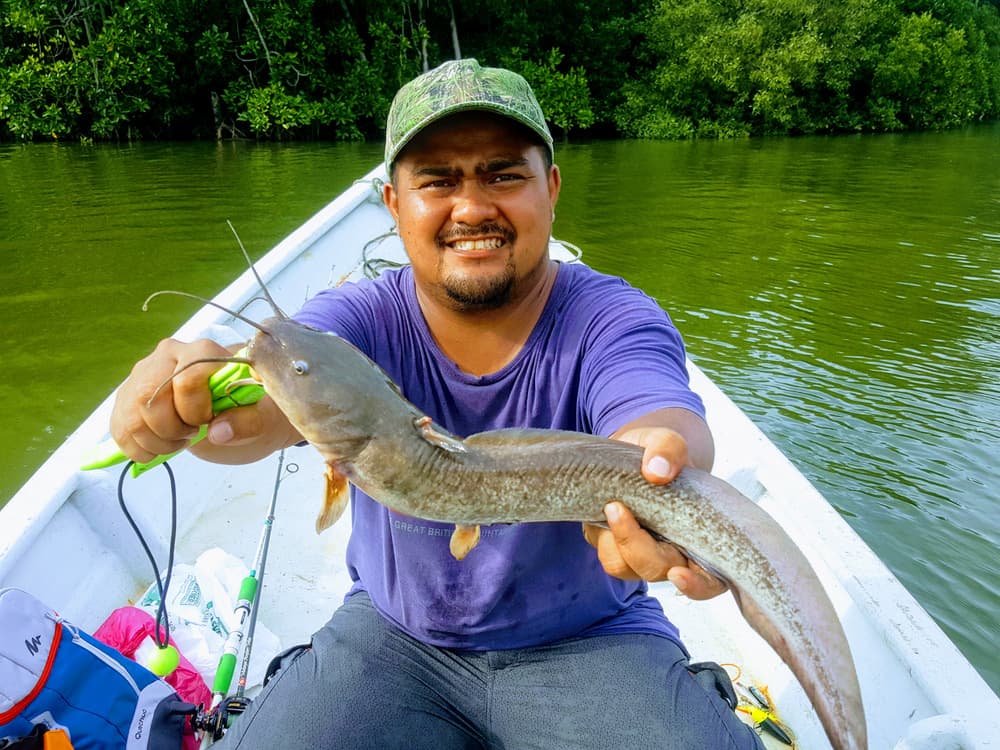
A mangrove fringe can look like scrub between the road and the sea. The research says it is the reason the sea beyond it holds fish.