Fishyology Insight
Eighty-five percent of the ornamental freshwater fish species on sale in Klang Valley pet stores are not native to Malaysia, and 39 percent of the species surveyed carry a high risk of invasion if they reach open water (Saba et al., 2020, Scientific Reports). That is one shop counter. Across the country, the research literature records more than 30 non-native food fish species and over 170 ornamental and other alien species (Saba et al., 2020, Aquatic Invasions). Six of them, including the peacock bass and the African sharptooth catfish, are rated high invasion risks with the potential to reach protected areas (Vythalingam et al., 2022). Several of the six are fish that Malaysian anglers target on purpose.
Nemo assembled this piece from a body of literature compiled and summarized via Scopus AI, then traced each claim to the publication the report cites for it. Where a cited study turned out to be narrower than the claim attached to it, or came from outside Malaysia, the text says so. The aim is not to reproduce the review but to pull out what bears on the water Malaysian anglers actually fish: which species are spreading, how they got there, what they displace, and what the tools for finding them can and cannot yet do.
Scope and Method of the Synthesis
The underlying literature runs from the 1980s to 2024, with its weight in recent molecular and policy work. It spans ecology, fisheries science, molecular biology, environmental policy and socio-economics, and it draws on checklists, pet-store and public surveys, maximum-entropy (MaxEnt) habitat modeling, and laboratory validation of rapid DNA-based identification.
Four limitations govern how the rest should be read. First, data on alien fish diversity and distribution are incomplete, and the gap is widest in Sabah and Sarawak, which are also the regions with the highest endemism (Ng et al., 2017; Vythalingam et al., 2022). Second, the molecular detection tools are promising but have not yet been validated widely in the field or built into any national programme. Third, socio-economic impacts vary by region and are likely underreported, because survey coverage is thin outside the Klang Valley. Fourth, several figures in the source report come from studies conducted outside Malaysia or outside freshwater fish entirely; Nemo flags these where they appear rather than presenting them as local findings.
Six Species That Carry the Highest Risk
The six species that Vythalingam et al. (2022) modeled as high-risk invaders are a familiar list for anyone who fishes lowland Peninsular water.
| Species | Common Name |
|---|---|
| Cichla ocellaris | Peacock bass |
| Clarias gariepinus | African sharptooth catfish |
| Oreochromis niloticus | Nile tilapia |
| Oreochromis mossambicus | Mozambique tilapia |
| Poecilia reticulata | Guppy |
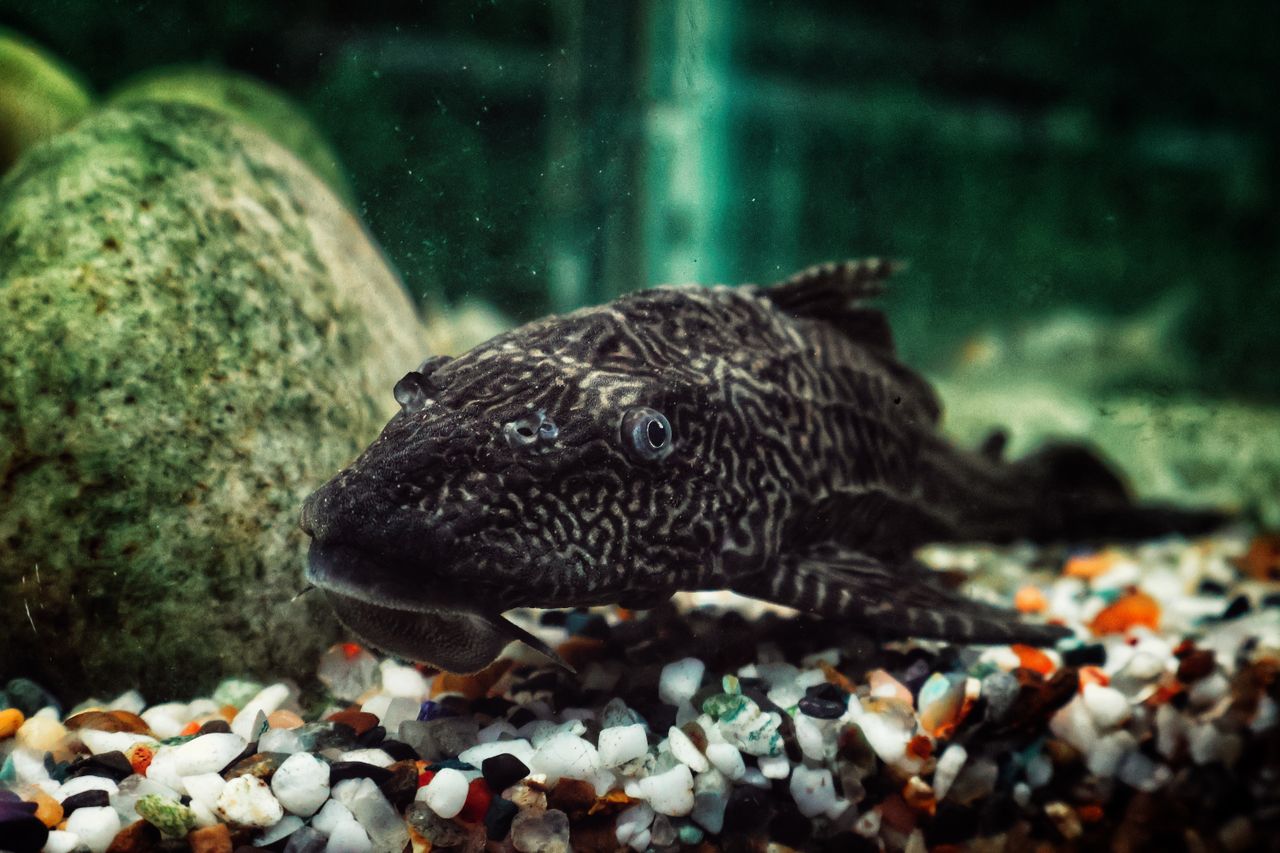
| Pterygoplichthys pardalis | Sailfin catfish |
Table 1. The six alien fish species modeled as high invasion risks in Malaysia, with potential to invade protected areas (Vythalingam et al., 2022).
What unites them is tolerance. The literature describes high-risk species that survive low dissolved oxygen, high ammonia and acidic water, the conditions that degraded urban rivers routinely produce. In the Klang Valley, alien and native fishes show broad overlap in diet, and alien species dominate the disturbed habitats where natives struggle (Saba et al., 2021, Animals). For the two aquaculture heavyweights, the report attaches high fecundity and rapid growth, though the studies it cites for those traits were conducted in Ethiopia and Brazil, not Malaysia.
The MaxEnt modeling adds a geographic warning. Minimum temperature of the coldest month and isothermality, a measure of how stable temperature is across the year, were the strongest predictors of where these species could establish, and they point particularly toward Sabah and Sarawak (Vythalingam et al., 2022). The regions with the least baseline data are the ones the models flag as most suitable.
Pathways: The Pet Shop, the Farm, the Ship
Three human routes account for nearly every alien fish in Malaysian water.
The ornamental trade is the largest. Beyond the 85 percent figure, Saba et al. (2020, Scientific Reports) found that pet-store regulation lacks the risk assessment and monitoring that high-risk species would warrant. The trade also pays: alien species provided the highest share of income for 42 percent of pet-store owners surveyed in the Klang Valley (Saba et al., 2021, PeerJ). That is the central contradiction of the subject. The species that pose the risk are the same ones keeping the shops open.
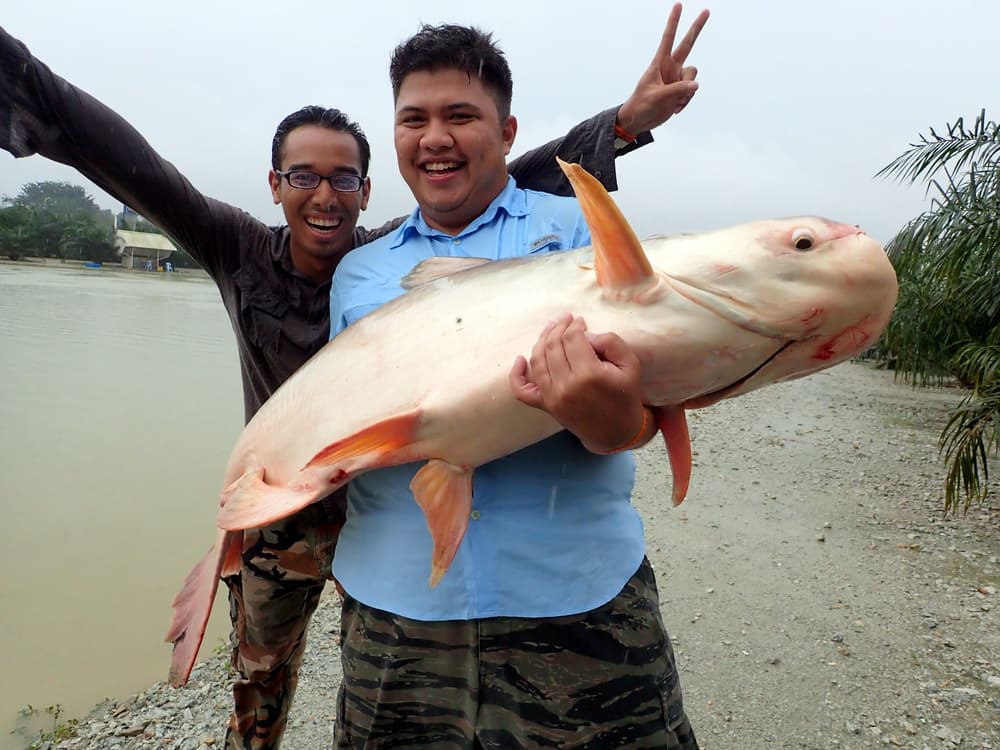
Aquaculture is the second route, and the African sharptooth catfish is its emblem. Introduced for food production, it has since been formally screened as an invasion risk in Sarawak using the Fish Invasiveness Screening Kit (Kiat & Rahim, 2023). Non-native species now dominate the production and economic value of Malaysian freshwater aquaculture (Saba et al., 2020, Aquatic Invasions).
Ballast water is the third. Malaysia has ratified the International Convention for the Control and Management of Ships' Ballast Water 2004, but Mohd Zaideen (2019) describes its implementation as a paradox: the commitment exists on paper while enforcement remains weak.
Pollution and urbanization do not introduce fish, but they decide which introductions succeed. Water high in ammonia and nitrite and low in dissolved oxygen filters out sensitive natives and leaves the tolerant aliens with open habitat (Saba et al., 2021, Animals).
of the ornamental fish species surveyed in Klang Valley pet stores were assessed as high invasion risks.
Every release of an unwanted aquarium fish into a drain, pond or river is a draw from that pool.
Source: Saba et al., 2020, *Scientific Reports*
What Alien Fish Do to Native Water
The ecological case against these species rests on four mechanisms: they outcompete native fish, prey on them, hybridize with them, and in the process make communities more alike from one river to the next, a process called biotic homogenization.
The African sharptooth catfish offers the clearest documented case. Across the Malay Peninsula it displaces native catfish through competition for both habitat and food (Low et al., 2022). The sailfin catfishes offer a different kind of damage. In the Langat River, the vermiculated sailfin catfish, Pterygoplichthys disjunctivus, modifies benthic habitat and alters nutrient dynamics (Anand Prakash et al., 2022). A fish that changes the riverbed changes conditions for every species that feeds or spawns on it.
The spatial picture follows from this. Klang Valley rivers are now dominated by invasive species (Saba et al., 2021, Animals), while the forested rivers of Sabah and Sarawak remain too poorly surveyed to say how far the same process has gone.
"The regions the habitat models flag as most suitable for invasion are the same regions where the baseline survey data are thinnest.
"
— Nemo, Fishyology Insight
A Correlation the Literature Overstates
The source report links river pollution to alien fish dominance, and from there to public health risks such as E. coli and heavy-metal contamination. Nemo does not repeat that claim at face value. The health study it cites measured faecal bacteria in rivers in Terengganu and does not examine fish communities at all. The defensible reading is narrower: polluted water favours tolerant alien species, as the Klang Valley work shows, and polluted water independently carries health risks. Alien fish are a symptom of degraded rivers far more clearly than they are a cause of human health problems.
Public understanding is uneven too. Saba et al. (2021, Management of Biological Invasions) found that knowledge of alien fish impacts varies by region and demographic group, and that education and outreach are critical to any management effort. The literature also points to models that work. Sarawak's Tagang programme, a river conservation scheme, has improved river health and strengthened the indigenous Dayak community that manages it (Keling et al., 2021).
Detection Has Outrun Enforcement
The most encouraging work in the literature is molecular. Vythalingam, Hossain and Bhassu (2021) developed a rapid in-situ detection kit based on loop-mediated isothermal amplification (LAMP), an assay that identifies the six high-risk species with high specificity and sensitivity and that runs in the field rather than a laboratory. Environmental DNA (eDNA) metabarcoding, which identifies fish from the genetic traces they leave in water, has been demonstrated on Malaysian tropical rivers using portable nanopore sequencing (Munian et al., 2024). Combined with GIS mapping, eDNA offers non-invasive, low-cost monitoring across whole catchments.
Both tools carry caveats. The LAMP kit still needs broader field validation, and eDNA is only as good as the genetic reference library behind it, which remains incomplete for Malaysian freshwater fish.
On control, the report presents a comparison in which biological control cut target populations by 80.7 percent over 12 months, against 75.6 percent for chemical control and 57.4 percent for mechanical removal, with benefit-cost ratios of 3.84, 2.50 and 1.71. Those figures come from a general cost-benefit study of invasive species control in protected ecosystems (Mohammad et al., 2026), not from trials on alien fish in Malaysian rivers. They indicate a direction, with biological control offering the fewest non-target effects, but they should not be read as a tested prescription for removing peacock bass from a Perak reservoir.
Policy remains the weak link. The national Fishery Development and Management Plan and the ballast water convention provide a framework; enforcement does not yet match it (Mohd Zaideen, 2019).
Applied Significance for Malaysian Anglers
For anglers, this literature contains an uncomfortable fact and a useful one.
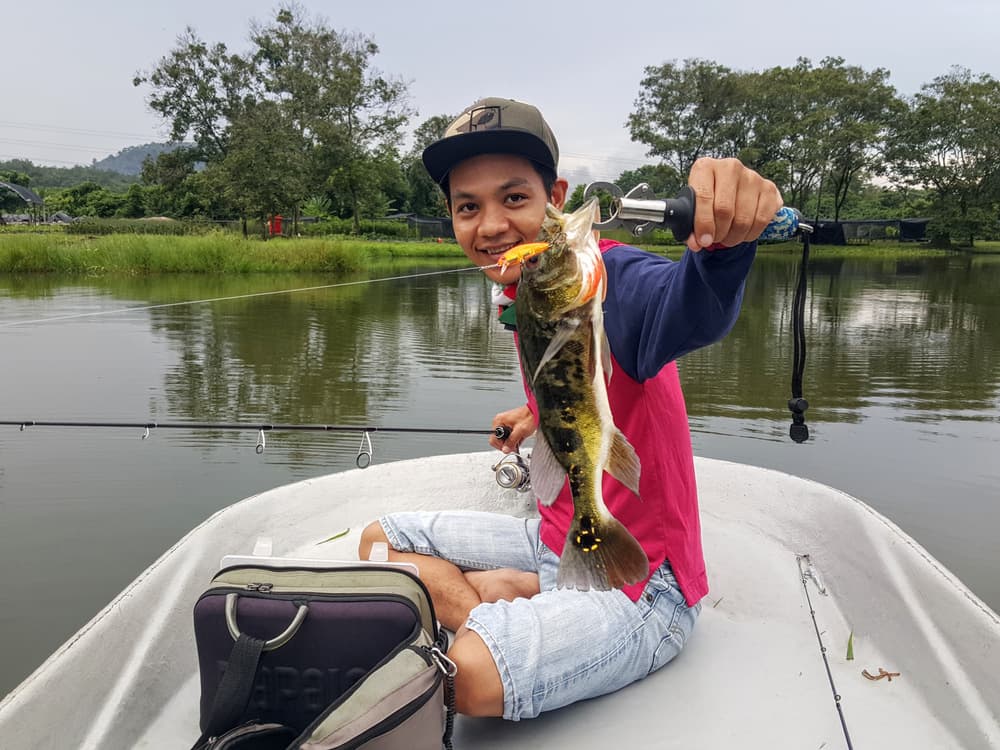
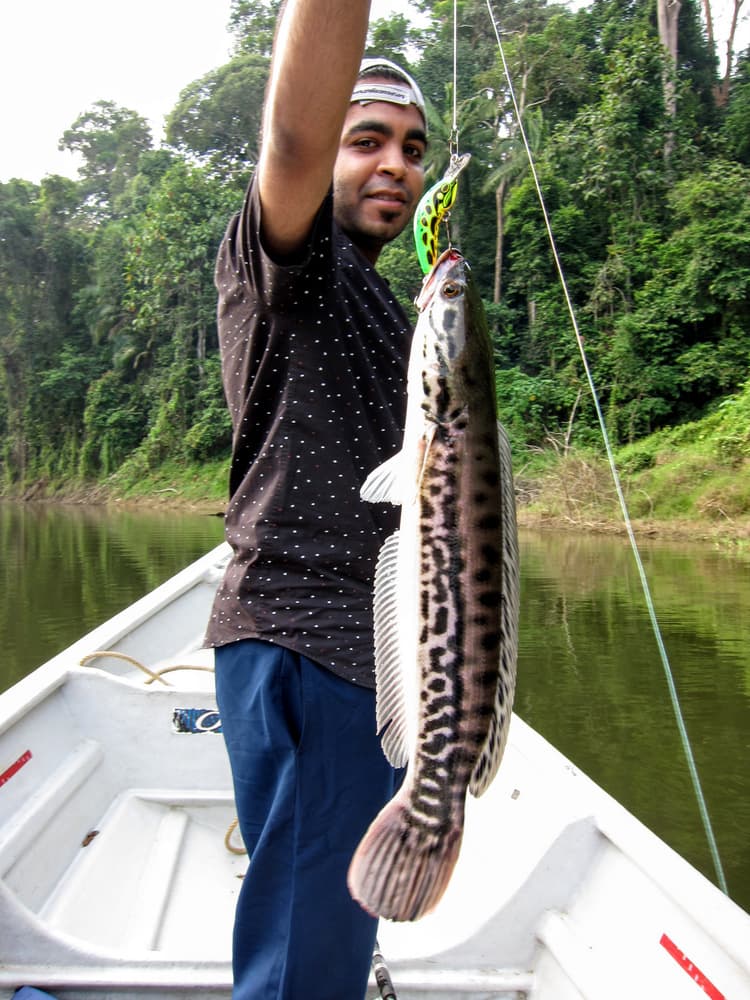
The uncomfortable fact is that recreational fishing is part of the pathway. Peacock bass is a high-risk invader and a sportfish anglers target at the same time, and the African sharptooth catfish is a pond staple. Moving fish between water bodies, or releasing live bait and surplus aquarium stock, is exactly the kind of human-mediated introduction the models describe. No study here condemns fishing for these species where they are already established. The risk lies in carrying them somewhere new, especially toward the forested rivers and protected areas the MaxEnt models flag.
The useful fact is that anglers are already contributing data. Aqmal-Naser et al. (2024) used citizen science records to document the invasion of a non-native fish, Hemibagrus wyckioides, in Peninsular Malaysia. The literature repeatedly names citizen science as a way to fill survey gaps in remote water, and repeatedly names the combination of eDNA, GIS and citizen reporting as the monitoring model to build. An angler who photographs an unusual catch, notes the location, and reports it is generating the kind of record the researchers say they lack.
The research gaps are clear: baseline surveys in Sabah and Sarawak, field validation of molecular tools, better genetic reference libraries, and enforcement that matches the policy on paper. The anglers who fish East Malaysian rivers are among the few people regularly in that water. What they see and record now will help decide whether the models' warnings for Borneo are acted on before the invasions arrive or confirmed afterward.